Michael Hafftka Shines In The Dark

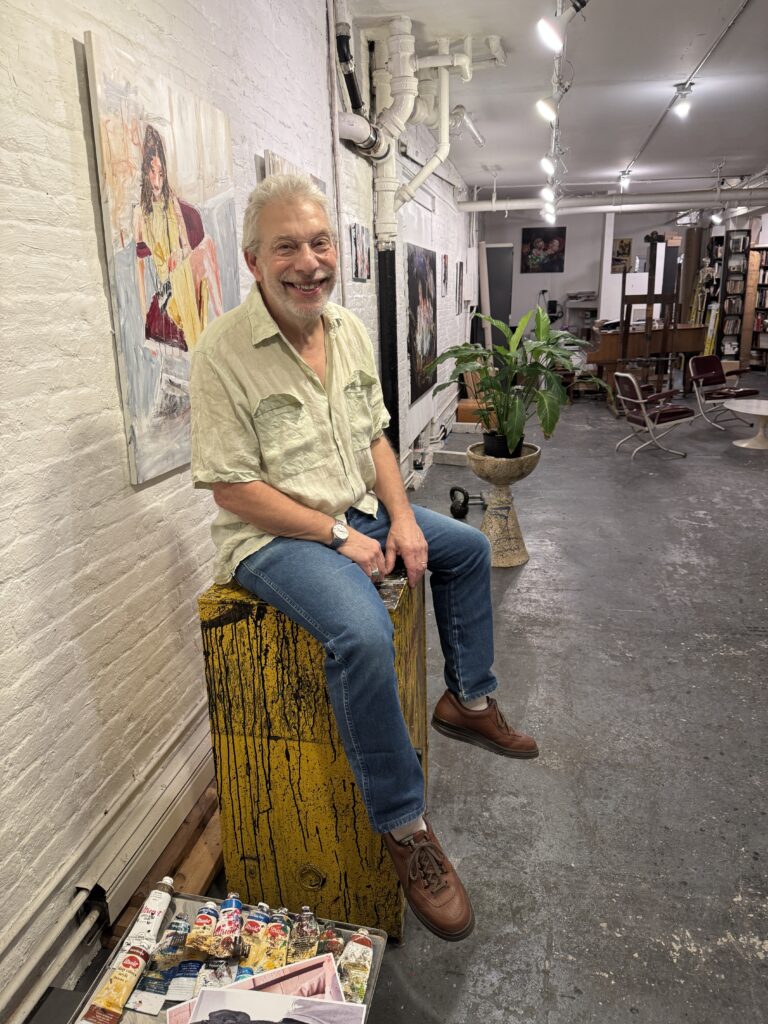
Michael Hafftka in Studio
I opened the car door and stepped out with my red umbrella in hand onto the quiet street in Brooklyn where Michael Hafftka lives and works. I had come to New York to spend time with Michael and his wife Yonat to see his work as I prepared to curate his upcoming exhibition in Los Angeles. He told me before I got there, the bell wasn’t working, and I told him, no problem; I could just yell up a window like Rocky calling Adrian. I didn’t have to. He was there waiting with a big smile, which is probably what people remember most about meeting him in person: his big smile and warm disposition.
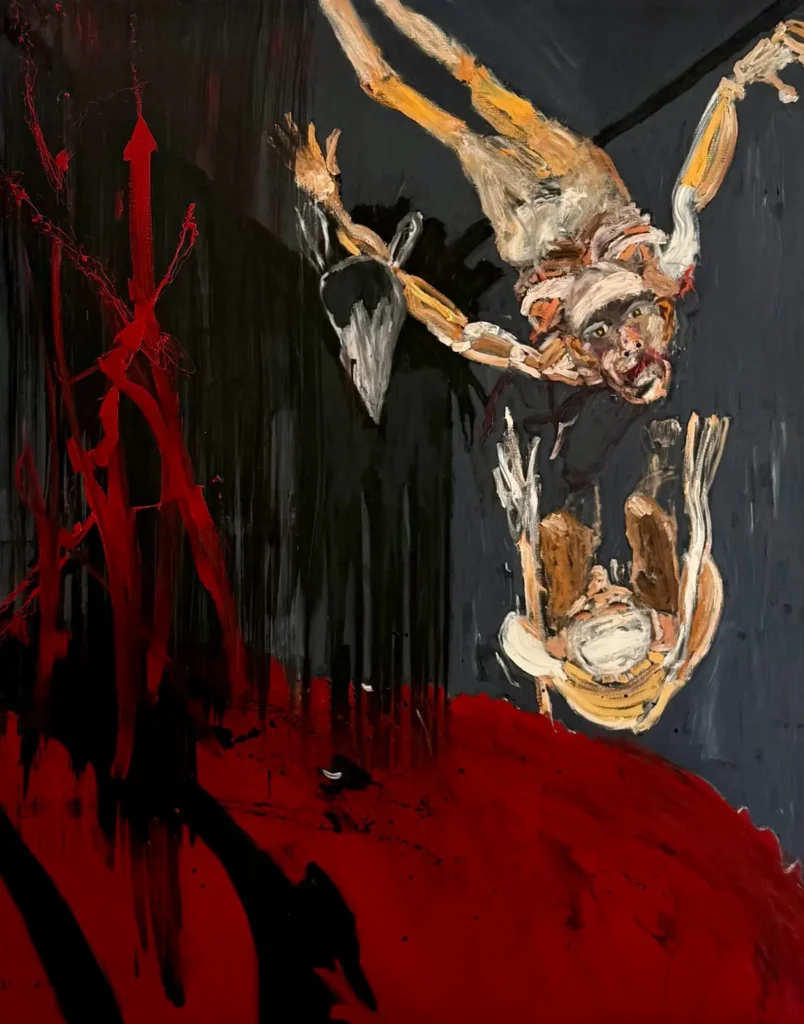
Fly 1993 Oil on Linen 78 x 62″
Being with him, you soon realize something very important that becomes unveiled in his art. Michael is a people person. For him, being with people fuels his creativity. He is, after all, a figurative painter. We sat together, looking through years of paintings and drawings on handmade paper. Each carried a different mood, a different time, and usually a different person. Michael has a strong intuition for people and an ability to translate what he senses into paint, whether the source is history, a memory, a dream, or someone sitting before him.
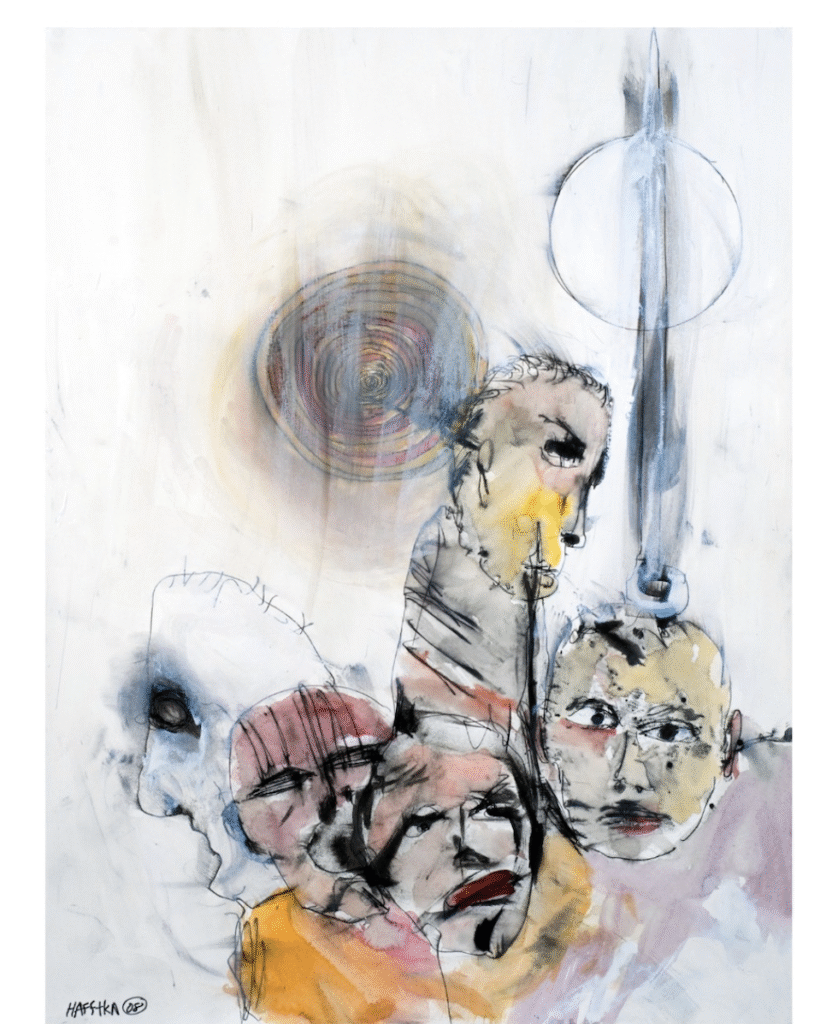
Zohar Be-Reshit #4 30x 22″ Ink and Watercolors on paper
He usually does not begin with preliminary sketches. He starts and the work unfolds. The images can come to life quickly and intensely. The honesty in the work is what makes it so good. Relatable does not give the work enough credit as a term. It’s more than that: At times, feeling can come to life in a single brushstroke. A better description could be spirit captured. Feelings are complicated, and they live in all of us. Surface, color, texture, and gesture carry the essence of how he paints. His process requires the grit to let the answer emerge in its own time.
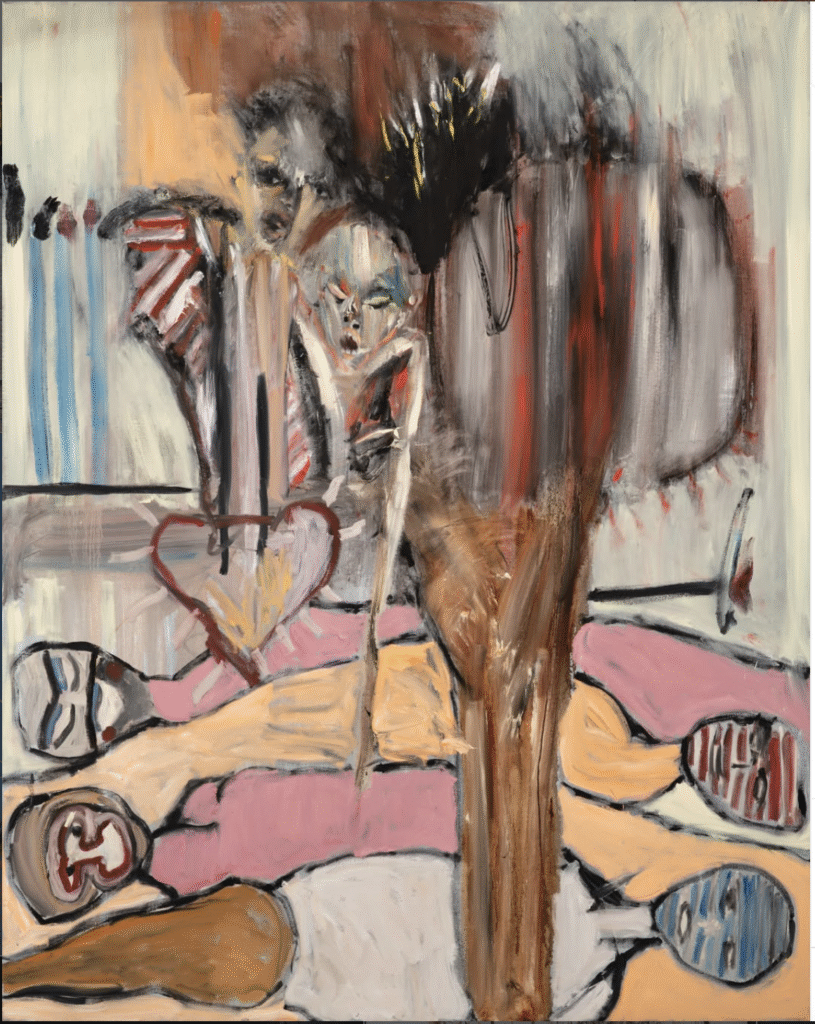
Covenant Between The Pieces 1997 Oil on Canvas 78 x 62″
Some paintings begin with what is seen. Michael Hafftka’s begin with what he feels, an act of discovery. Love, belonging, vulnerability, fear- these things are not illustrated so much as allowed to surface. Rather than recollections in the traditional sense, the paintings feel like emotional echoes, somehow deeper than sight. His figures emerge, dissolve, and reappear, existing somewhere between presence and absence, certainty and mystery. Meaning is never entirely fixed.
To comprehend the depth of that feeling, one must understand something of the life behind it.
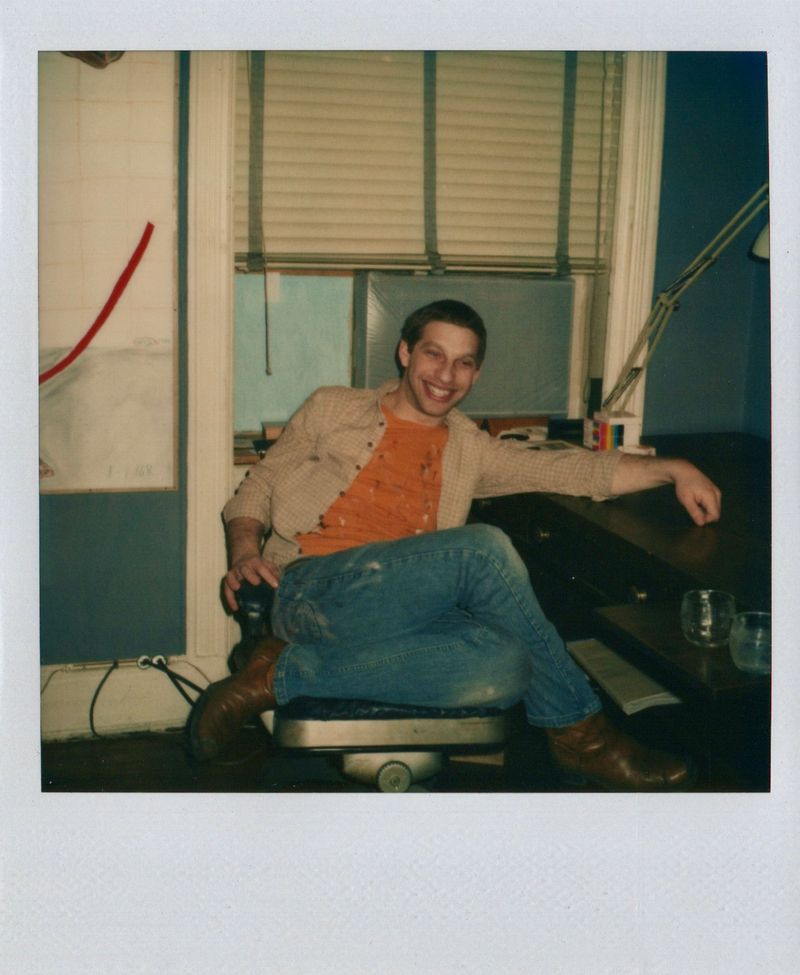
Michael Hafftka early studio shots. Photo: Courtesy of the artist
Michael was born in 1953 in Manhattan and raised in the Marble Hill section of the Bronx. His parents, Simon Hafftka and Eva Hershko, were European refugees and Holocaust survivors. Simon and his cousin Alexander were the only survivors of a large family. Michael grew up not with the Holocaust as distant history, but with its afterlife inside the home: its silences, anxieties, absences, and impossible arithmetic of chance. Many of his earlier works reflect the stories he was told growing up. He has said that much of his grasp of the world came through his perception of his parents’ wartime experiences. That inheritance runs through his work as an awareness of how precarious safety can be and how much exists beneath what can be seen. It also gave him a fierce need for freedom that shaped both his life and the way he painted.
He did not travel an orderly path toward becoming an artist. He tried filmmaking, but collaboration interfered with the seclusion he needed. Photography lacked the immediacy he was seeking. He explored writing poetry as well.
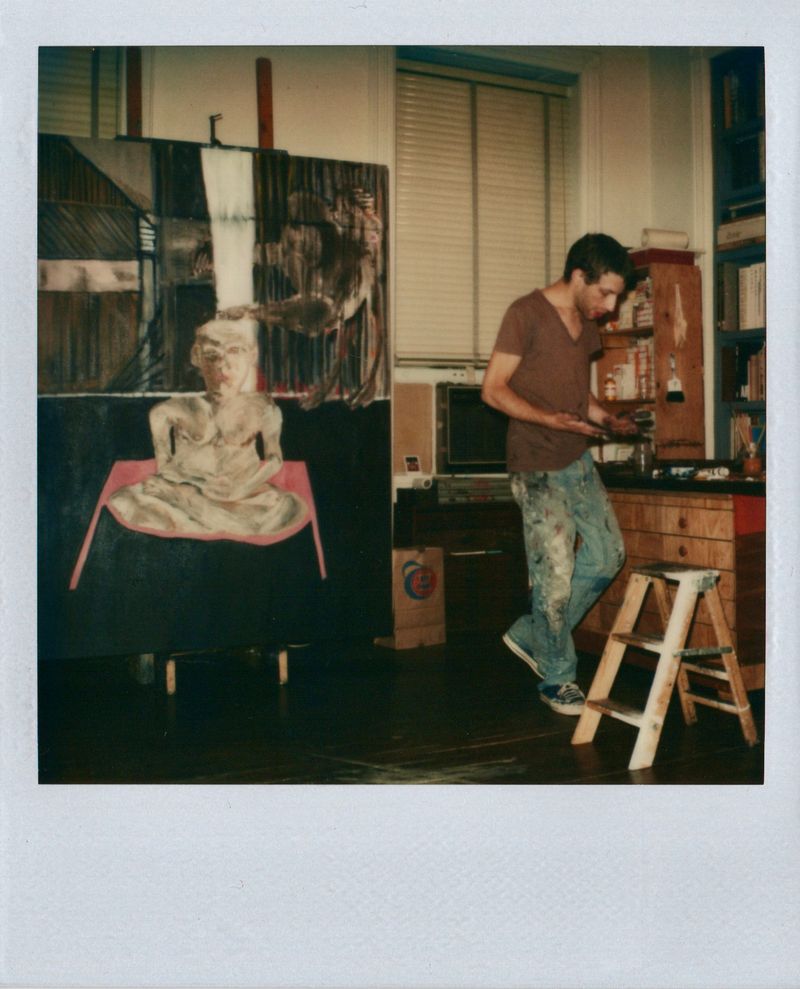
Early Studio Shots with Michael Hafftka Photo: Courtesy of the Artist
Then he found painting: tactile, direct, private, and alive. It could move as quickly as thought while reaching beyond words. It felt right.
In 1971, after his mother died, Michael used money earned in a bicycle shop and an Army & Navy store to travel to Budapest. He had discovered that his maternal grandmother was still alive. She didn’t speak English; the bit she knew came from Shakespeare. It is a nearly cinematic detail: grandmother and grandson meeting, using words borrowed from another century. There is something tender about two people separated by a lifetime of history finding whatever language they could to know one another. I find it deeply moving.
From Budapest, he traveled to Barcelona for several months, absorbing the city’s art and architecture, especially Gaudí, whose buildings demonstrated how structure itself could hold emotion. He wrote poetry and experienced the liberation of moving through a place without fully knowing its language. I think that freedom, the ability to see without immediately naming, would later become central to his painting.
He told me he often has difficulty finding titles for his works. I liked that. It reveals that the title isn’t the most important thing. The passion for what he does gives the meaning. Back in New York, he earned money selling jewelry outside Bloomingdale’s and his own photographs outside the Metropolitan Museum of Art and the Museum of Modern Art. There is something poetic about him standing on those sidewalks, selling what he could, years before both museums would place his work in their permanent collections.
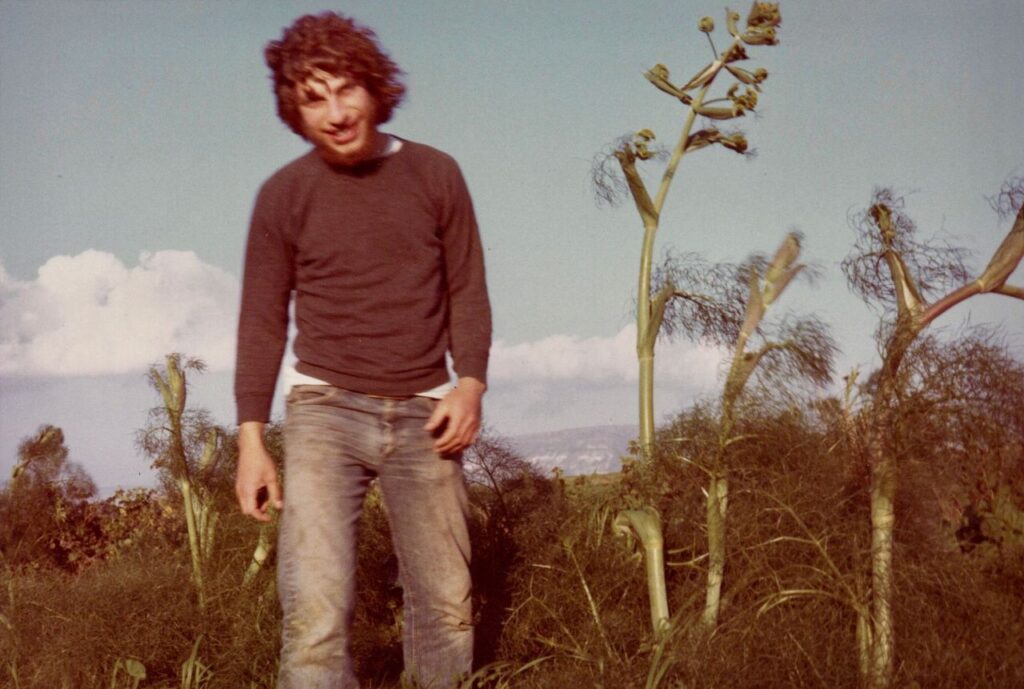
Michael Hafftka 1973 Photo: Courtesy of the Artist
In 1973, Michael sold his camera to help pay his way to Israel and volunteered on a kibbutz. In a small room beneath a water tank, his first art studio emerged. After a year, he moved to Herzliya, where he lived in a shack in an orchard near the sea, picking fruit from the trees, swimming, and painting day and night. It sounds idyllic, but more importantly, it was clarifying.
He found his purpose. Painting was no longer one prospect among many. It had begun to shape his life. He returned to New York determined to pursue it. He supported himself through paste-up and mechanical work and by driving trucks, all the while continuing to paint. In 1976, he exhibited at Rabinowitch and Guerra Gallery, the beginning of a long exhibition history. His tenacity tells us as much about Michael as any résumé ever could.
Recognition followed without recasting his commitment to the work. In 1986, Hafftka’s work appeared in Naked/Nude: Contemporary Prints at the Museum of Modern Art, where six plates from his Incisions portfolio were exhibited with Basquiat, Haring, Polke, and Rauschenberg. Over the course of his career, his work has been exhibited alongside many of the significant artists of his generation.
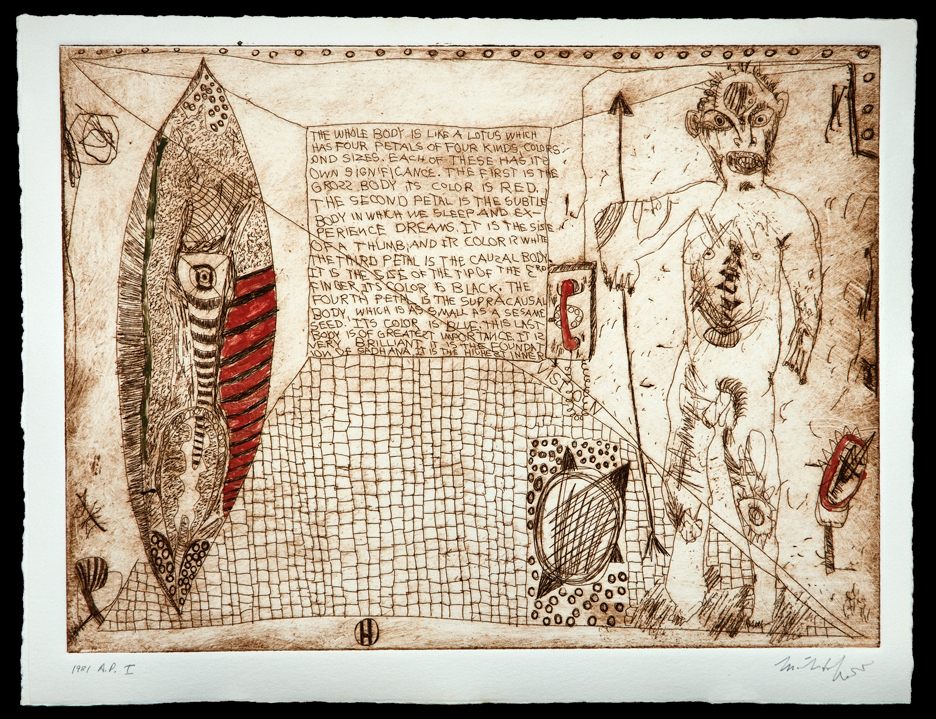
One of his Incisions at the MoMa in 1986
His work entered the permanent collections of the Museum of Modern Art, the Metropolitan Museum of Art, the British Museum, the National Gallery of Art, the San Francisco Museum of Modern Art, the Brooklyn Museum, the Carnegie Museum of Art, and the Library of Congress. Writers and curators including Sam Hunter, John Caldwell, Michael Brodsky, and William H. Gass recognized the psychological power and formal qualities of his practice.
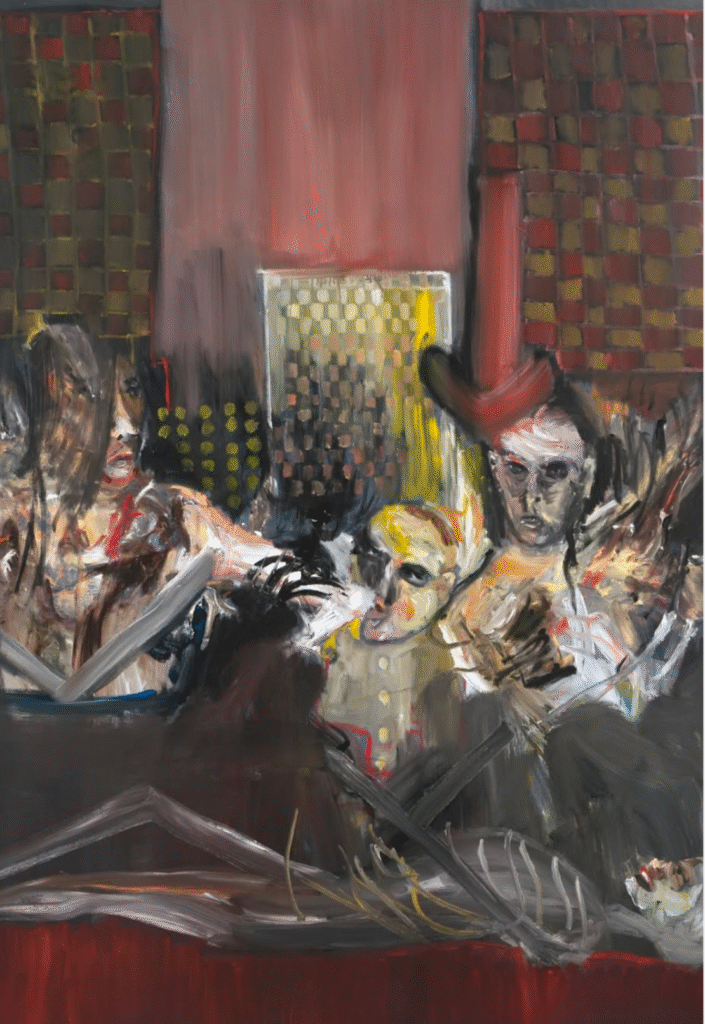
Anatomy Lesson 1997 Oil on Linen 78 x 62″
But résumés and museum collections tell only part of the story.
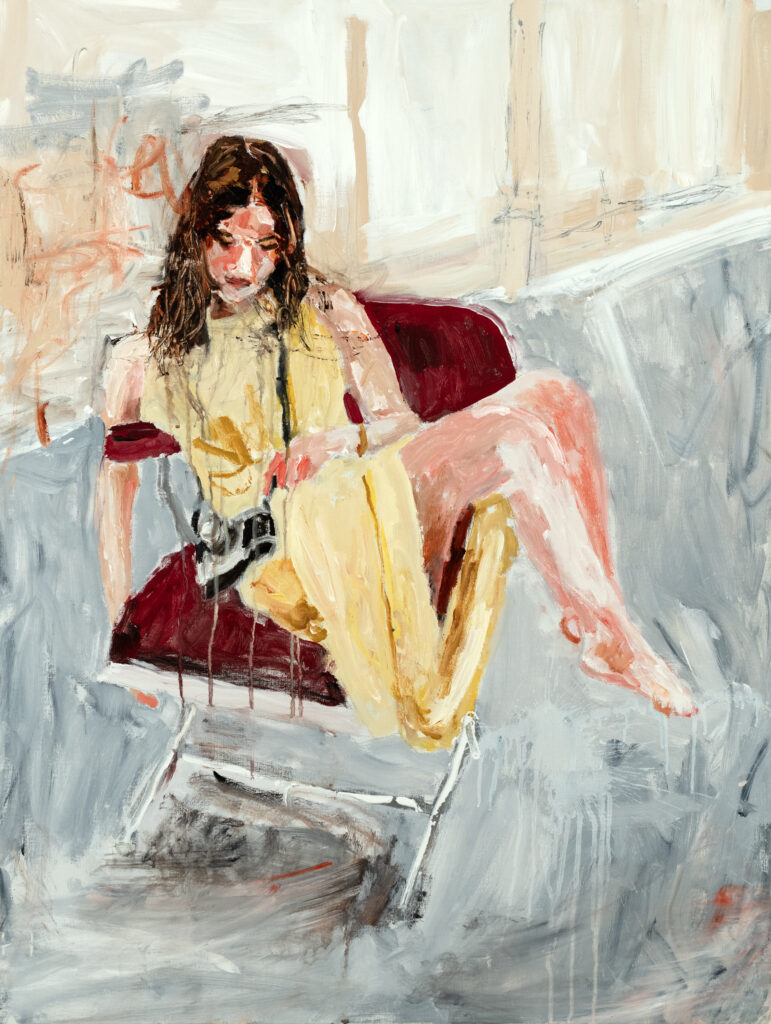
Muse with a Camera 2025 40 x 30″
Back in New York, after the rain stopped and the sun began to warm the streets, we walked down a damp sidewalk to another studio he has nearby. It was during that walk, I felt like I saw who Michael was as he greeted neighbors along the way. One of them, he pointed out, was the subject of a painting we had just seen on the wall in the studio. There she was: a person on the street and a figure on Michael’s wall. We stopped and talked. Walking beside Michael and Yonat, I began to understand what that familiarity meant. His portraits register relationships. They hold vulnerability, humor, fear, dignity, and something of a person’s history within a single presence. When you look at his work, the bare spaces become a stage for consciousness. With the explanatory furnishings withdrawn, the figure and the viewer have nowhere to hide.
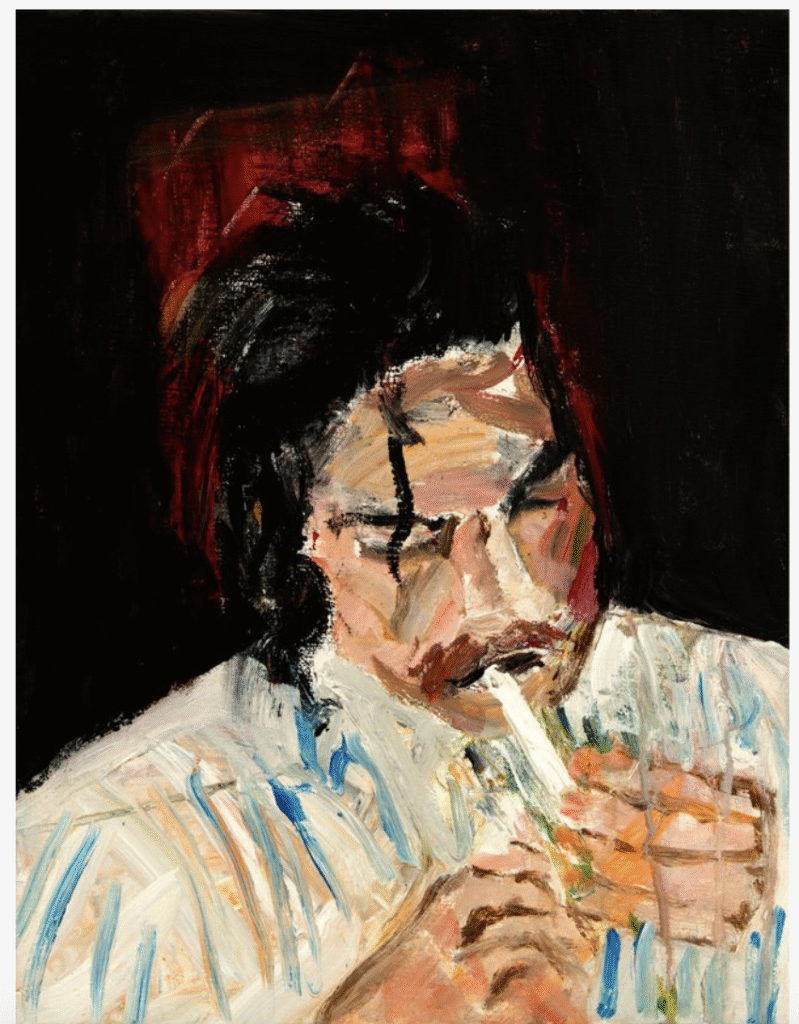
Still Burning 2025 16 x 12″ Acrylic on Canvas
Once we entered the other studio, with its tall ceilings and wood floors, I saw some of his newer paintings, and they completely floored me. These works were less blended, more frenetic with emotion and memory. Gorgeous blues, greens, and reds conveyed a softness and a sense of observation from afar, distinct from the immediacy of his earlier figurative paintings. Horses appeared gently, like companions in a daydream.
They were poetic. The paintings are brighter, filled with curiosity and melancholy. People wander, swim, splash in water, and rest in meadows while landscapes breathe around them. Each scene feels both fleeting and complete. Something had opened in the work. The paintings seemed to inhabit a safer, more beautiful place.
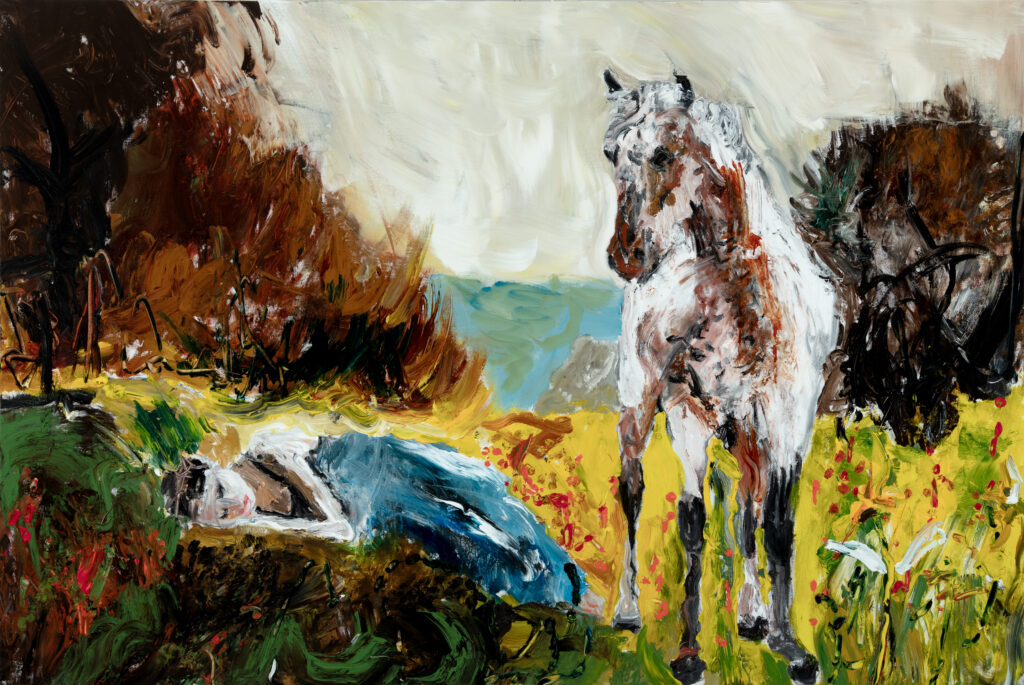
Peace of Mind 2024 48 x 72″
Over dinner, Michael and Yonat told me about their life together, their children, and their grandchildren. His warmth, humor, and devotion gave me a fuller understanding of the emotional range in his paintings.
I’ve noticed Michael frequently says, “I’m so lucky.” He says it with such conviction that it feels almost generative, as though gratitude itself has helped shape the life he inhabits. His positivity is neither naïve nor unearned. It comes from someone who understands how fragile life can be and chooses, nevertheless, to meet it with amazement. That sunny-side-up spirit, his delight in people, painting, and simply being here, is essential to who he is.
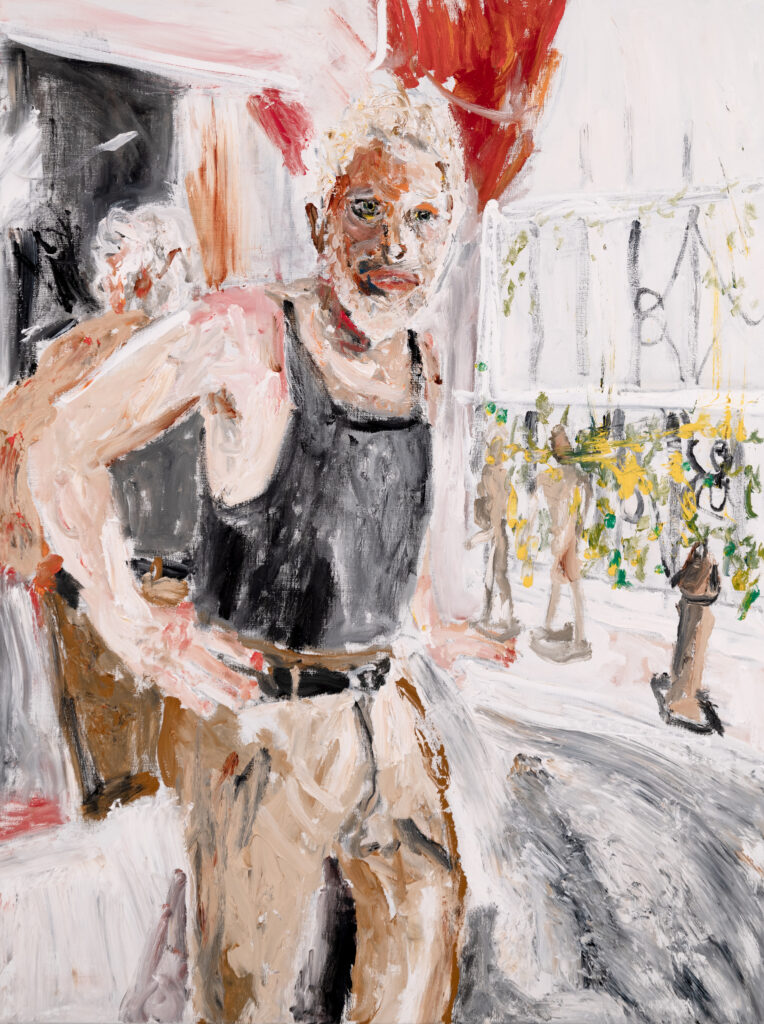
Self Portrait 2026 40 x 30″ Acrylic on Canvas
Michael began making digital works as early as 1996, creating what he then called “Computer Drawings.” More than two decades later, in 2021, he entered the emerging digital-art and NFT community, returning to the medium with new tools while also bringing those early works back into view. He is one of the few artists of his generation to have crossed into the digital world with genuine success. His newest series, Faces, sold out the day it was released. Friends of mine in the digital world reached out to me and said, “You found him!” a nod to his popularity in that space as well. I think his openness to trying new things and the frankness in what he does draw people to whatever, or however, he creates.
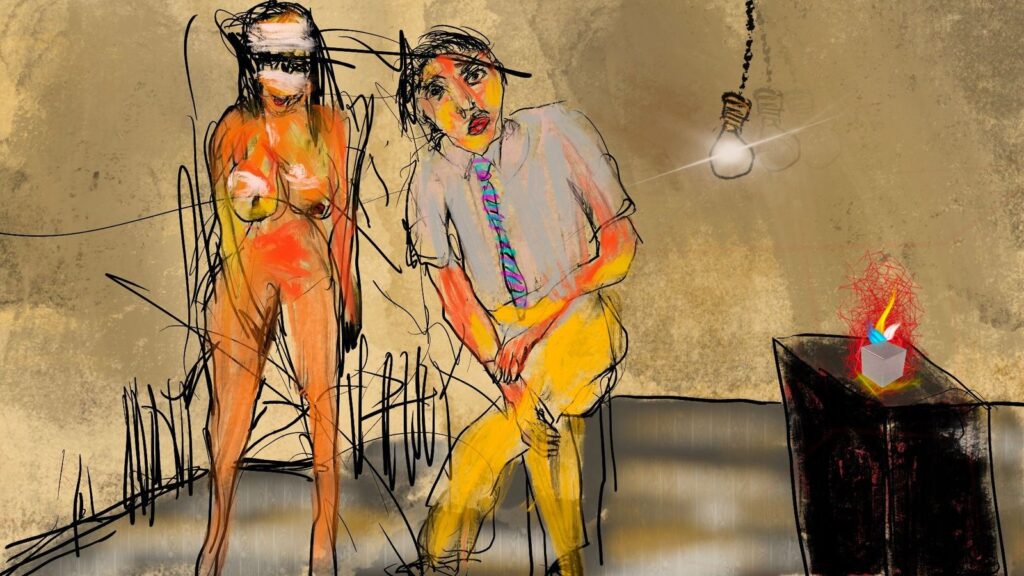
Cube Muse Digital Wrok
Darkness is present in Hafftka’s work, but it never stands alone. Beside it are tenderness, folly, intimacy, spiritual curiosity, and a child’s instinct to play. Michael has spent decades returning to the people and places closest to him. Across his work, the vocabulary changes, the palette opens, and new themes enter, yet the emotional honesty remains.
The lighter paintings are just as powerful because their beauty has been earned.
I keep returning to the young Michael beneath that water tower, painting through the day and into the night, and to the man he is now, in New York, still entering the studio with the excitement to let each painting find its own way.
The paintings do not reveal themselves all at once. They wait for us to arrive. They ask less to be understood than to be felt. Hafftka has spent fifty years painting what he feels and sharing it with whoever is willing to enter. Perhaps that is the beautiful thing about luck: once it is shared, it belongs to all of us.

The 61st edition of the Venice Biennale arrived under unusual circumstances. Long before the preview crowds. Continue reading
Color wasn’t play, it was reclaiming joy, subverting despair, insisting on life.
Through her fusion of photography, AI, and living forms, Dahlia Dreszer cultivates a new aesthetic ecology,. Continue reading
Chloe Chiasson brings you to a place where the earth smells like dry grass, cracked, worn leather, and warm. Continue reading