Venice Biennale- In Minor Keys- 2026

The 61st edition of the Venice Biennale arrived under unusual circumstances. Long before the preview crowds flooded the city and reclaimed their bi-annual Venetian rituals, the exhibition had already acquired the aura of a memorial. Curator Koyo Kouoh, the first African woman appointed artistic director of the Biennale, passed away unexpectedly in 2025, leaving behind a partially completed curatorial framework that was subsequently realized by her team. The exhibition, titled In Minor Keys, unfolded as both homage and proposition: an attempt to move away from spectacle toward slower registers of attention, intimacy, listening, and repair. In addition, conflict and activism defined this edition, sparked by the inclusion of the national pavilions of Israel and Russia, with a subsequent withdrawal of the jury and cancellation of the awards.
So, despite the idea of listening to the minor keys as a point of departure, Venice felt very much like a spectacle and the spaces to think and rest were fewer than expected (with some meaningful exceptions). The city was on one hand filled with conversations around geopolitics, and the seemingly impossible role of biennials as platforms for ethical representation, but thankfully also brimming with meaningful dialogues and exchange about the art encountered. The usual choreography of pavilion openings, dinners, and special events continued uninterrupted, but there was a perceptible hesitation beneath the social machinery. Perhaps that was the point of In Minor Keys: to insist on subtler frequencies in an era addicted to amplification. Kouoh’s premise was compelling, although the final realization proved partially uneven. The Biennale succeeded when it abandoned the language of didactic global inclusion and allowed works to remain unresolved, sensorial, and materially opaque. It faltered in moments when identity itself became aesthetic shorthand.
Outside the official exhibition, Venice once again reminded us that the real Biennale increasingly happens beyond the Giardini and Arsenale: inside palazzi transformed into temporary art spaces and laboratories of thought, during private dinners that allowed for meaningful exchange, in improvised conversations on canal bridges, during performances and activations, and at collateral exhibitions that often possessed more formal risk than the central exhibition itself.
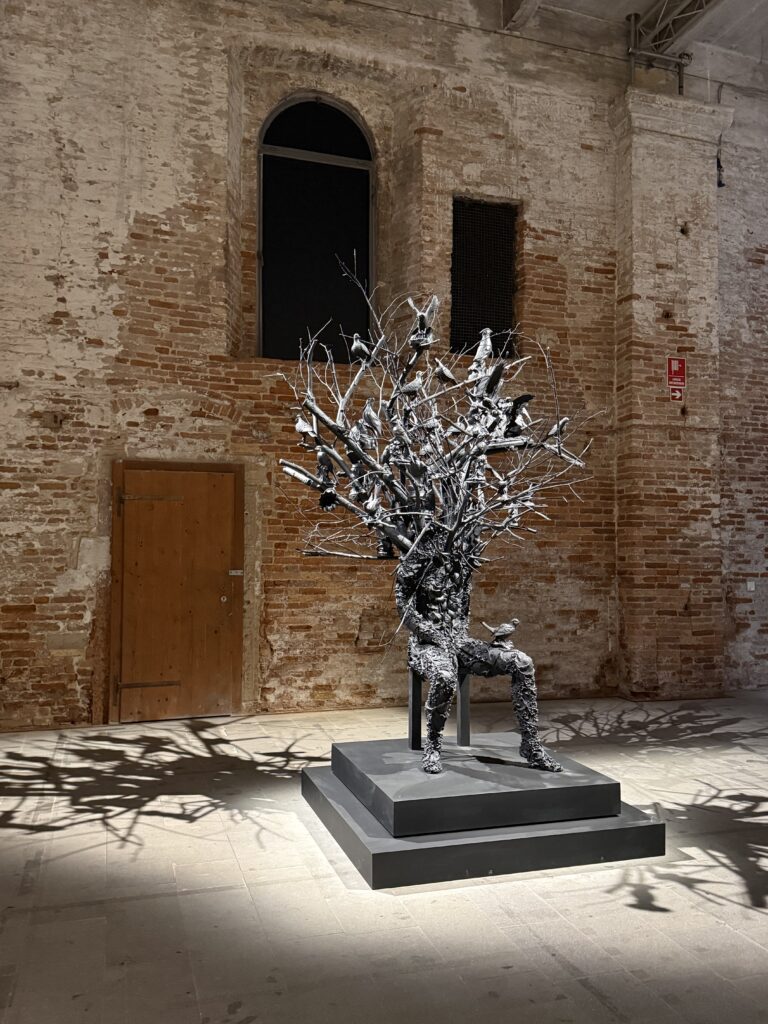
Nick Cave Arsenale Photo by Heike Dempster
The central exhibition occupied its familiar geography across the Giardini and Arsenale, bringing together works by 111 artists such as Nick Cave, Alfredo Jaar, Wangechi Mutu, Otobong Nkanga, Walid Raad, and Kennedy Yanko. The curatorial thesis emphasized “minor” forms of perception: listening rather than declaring, vibration rather than monumentality, spiritual resonance rather than institutional certainty. Sculptures, installations, textile works, ritual gestures, and ecological meditations dominated the exhibition’s atmosphere.The ambition was truly admirable and many of the works were absolutely outstanding, although the exhibition still struggled under the weight of its own ethical framing.
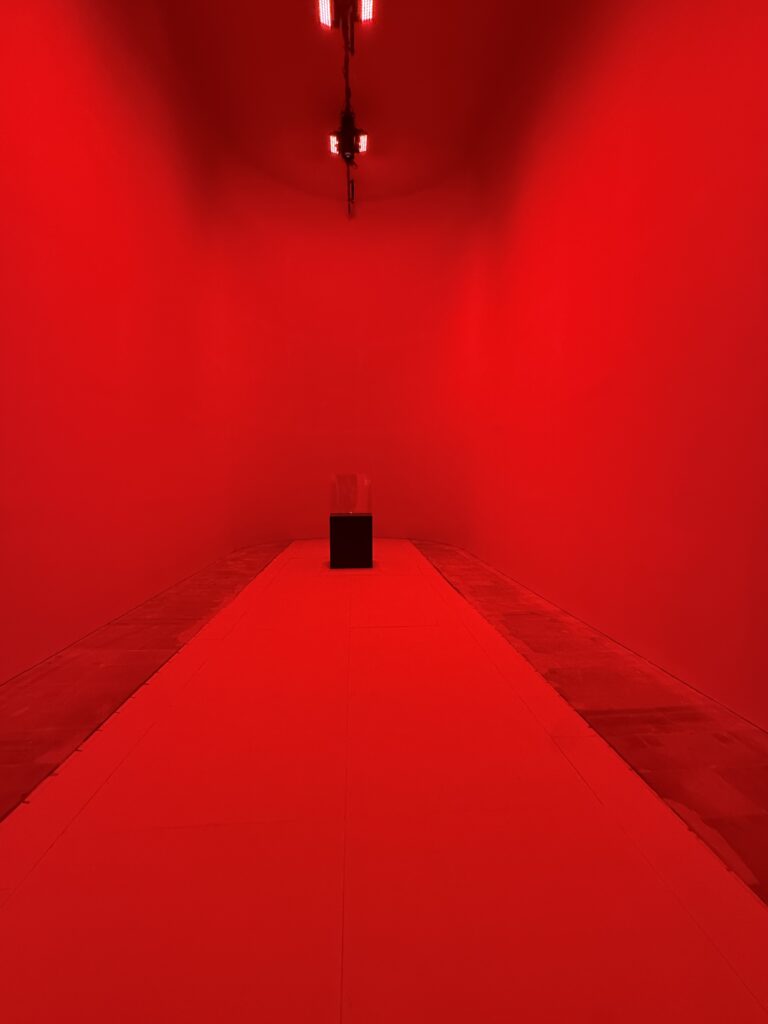
Alfredo Jaar Photo by Heike Dempster
What emerged repeatedly was a reduction of Indigenous and diasporic practices into categories of tactility, healing, and ancestral memory. Materiality became overcoded. Textiles, earth pigments, woven structures, organic matter, ritual objects, and sonic environments appeared so insistently that they began to produce a flattening effect. One sensed a curatorial desire to resist Western modernist hierarchies, yet the result paradoxically reinscribed another type of essentialism: the expectation that non-Western artists must perform proximity to land, spirituality, or embodied memory.
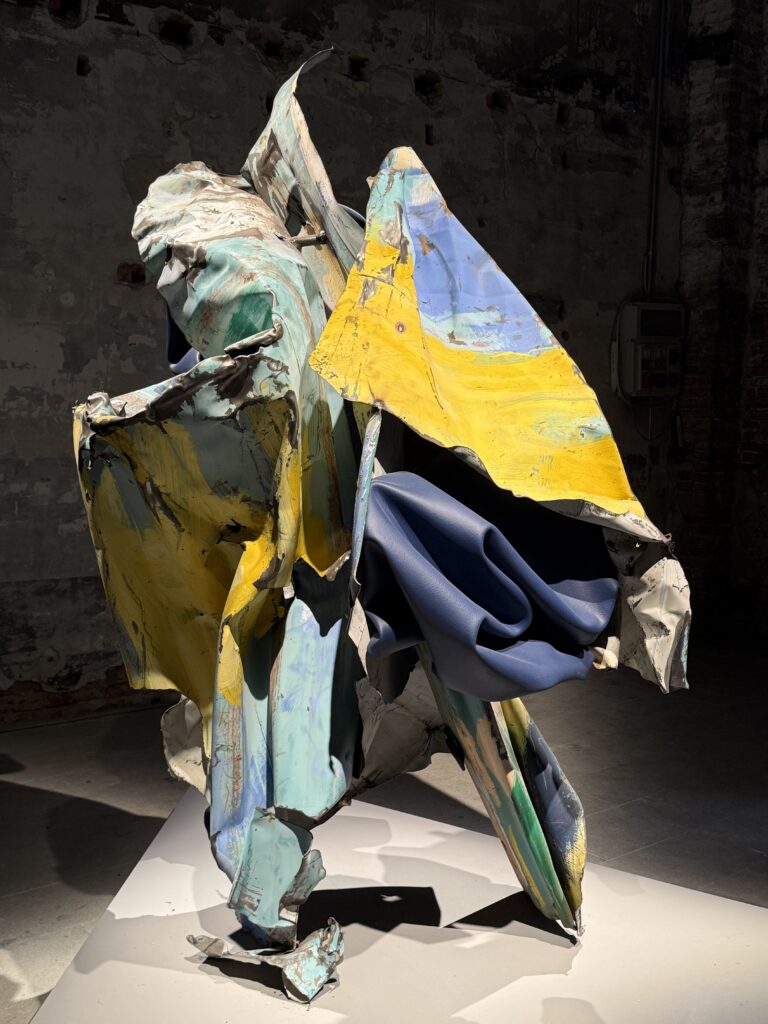
Kennedy Yanko Phtot by Heike Dempster
There is, of course, immense power in these materials and histories, but the exhibition did not allow enough space for the artists to occupy contradiction, artificiality, irony, technological estrangement, or conceptual opacity. Too often, their practices were framed through a vocabulary of authenticity.
The exhibition’s emotional intelligence was powerful so the question lingering throughout Venice was not whether representation matters — it clearly does — but whether contemporary institutions remain capable of imagining non-Western artistic subjectivities beyond ethnographic legibility.
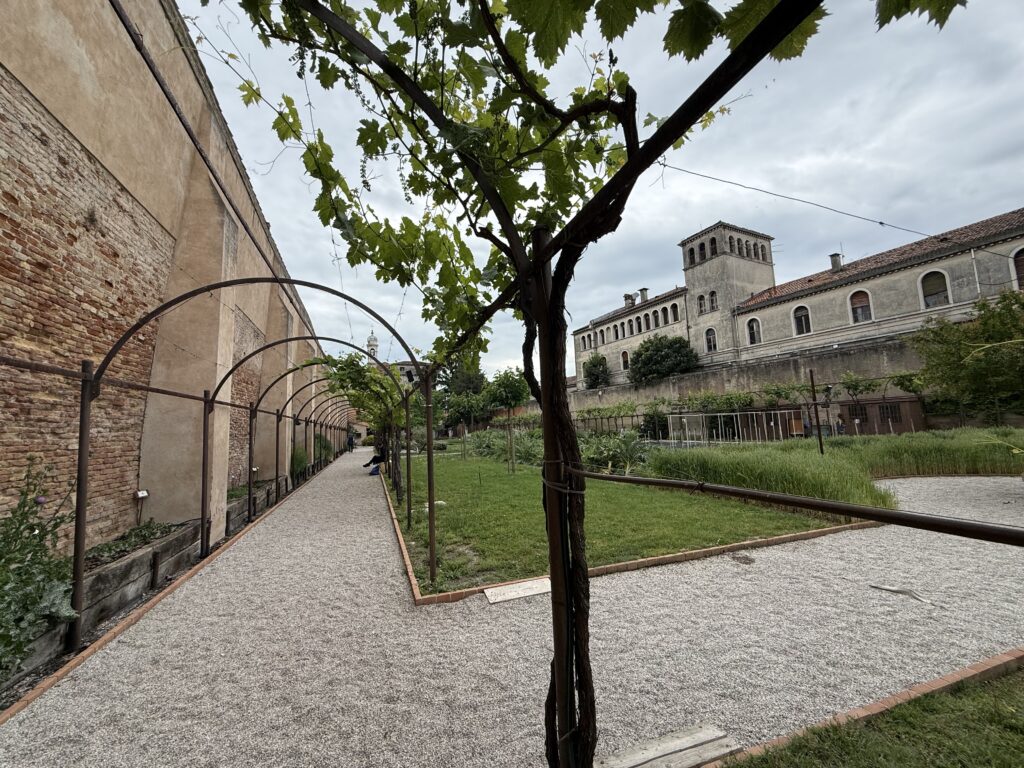
Pavilion of the Holy See: Photo: Heike Dempster
The Pavilion of the Holy See was among the most unexpectedly moving. Conceived around sound, mysticism, and collective listening, the project brought together musicians, poets, and artists including figures such as FKA twigs, Brian Eno, Dev Hzynes and Precious Okoyomon. Installed across two Venetian sites, the pavilion allowed silence and resonance to operate structurally. The immersive soundscape “The Ear is the Eye of the Soul” was a meditative and transformative experience roaming through and resting in the Giardino Mistico dei Carmelitani Scalzi, a hidden centuries-old monastery garden.
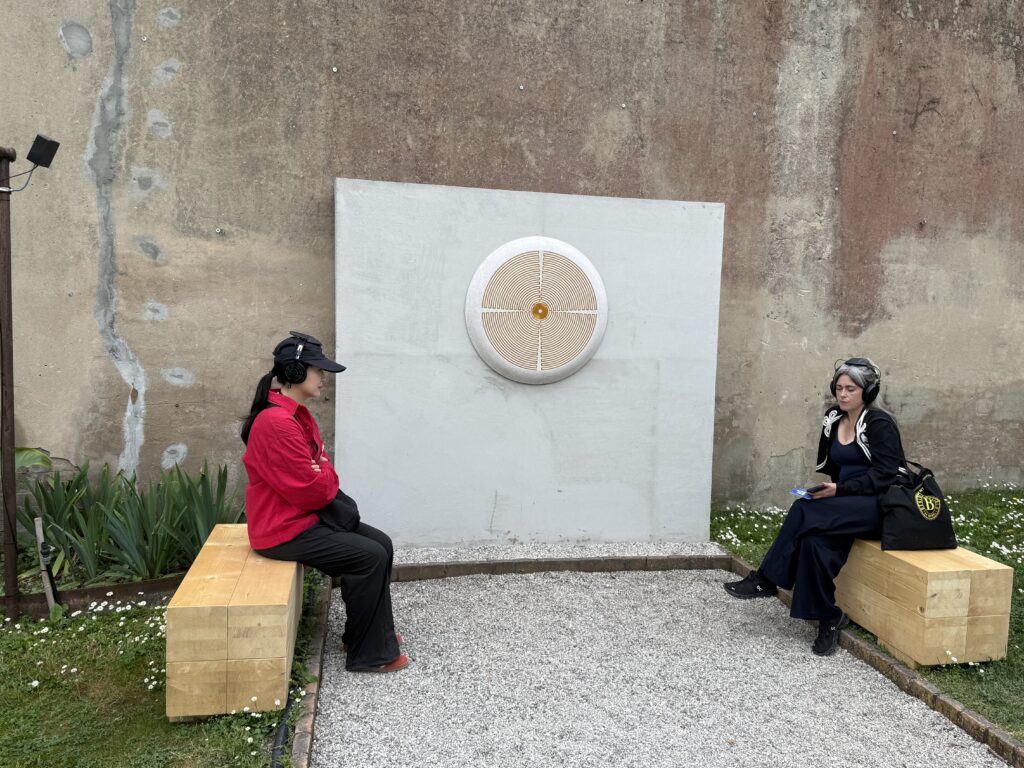
Visitors in the Holy See Pavillion Photo: Heike Dempster
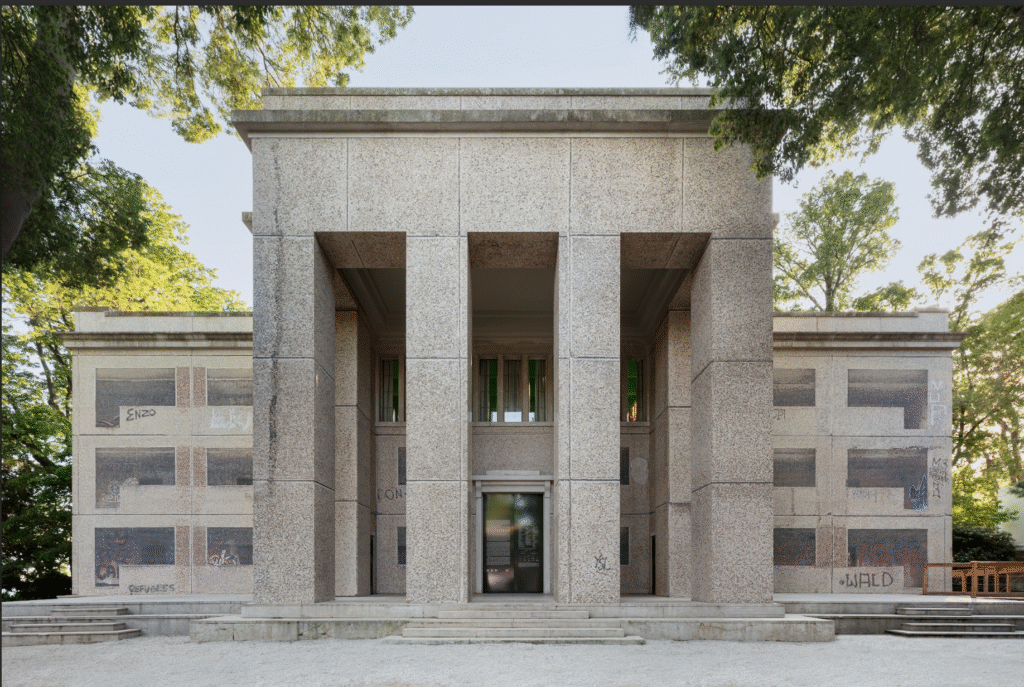
The Germany pavilion stood out for its intellectual rigor. Rejecting national identity as a fixed narrative, the exhibition “Ruin” explored bureaucratic memory, migration infrastructures, and post-industrial architectures through fragmented installations and moving image works. In ”Ruin”, the German Pavilion becomes a space in which physical and social structures, German ideologies, and lived biographies tangibly overlap, bringing architecture, history, and psychology into productive tension.
German Pavilion Sung Tieu Human Dignity Shall Be Inviolable, 2026 Photo-Andrea Rossetti
The exhibition’s title riffs on the word’s multiple associations. While the English word “ruin” refers to architectural and physical remnants, the German term “Ruin” signifies a state of collapse – economic, social, or moral. In newly produced works, Henrike Naumann and Sung Tieu draw on their research into the GDR and the transition period following reunification of East and West Germany in 1990, demonstrating how historical ruptures and gaps in political, social, and architectural structures continue to resonate – and are perhaps more evident than ever in a globalized present. Naumann and Tieu reflect on both German history and the German Pavilion’s fascist architecture by artistically re-appropriating the space. Using a formal vocabulary that oscillates between minimalist clarity and maximalist opulence, both artists employ the building as an ambivalent mirror of social dynamics from the recent past to the present.
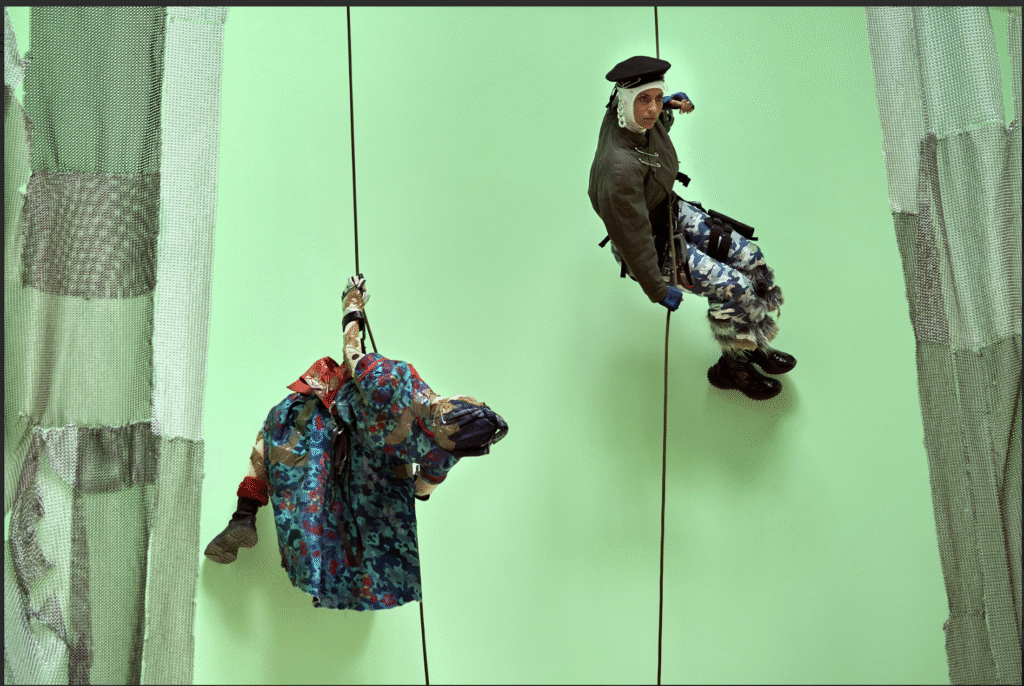
German Pavilion Opening Photo Clelia Cadamuro
A special mention must also go to Trümmerfrau, the performance intervention within the Germany pavilion. Referencing the historical figure of the “rubble women” who rebuilt German cities after the Second World War, the work complicated contemporary narratives of reconstruction and collective memory. Rather than presenting postwar labor as a heroic myth, Trümmerfrau exposed reconstruction itself as an ongoing psychological and political condition. Performed with stark physical intensity, it became one of the few works in Venice this year to confront European historical memory without collapsing into institutional self-consciousness.
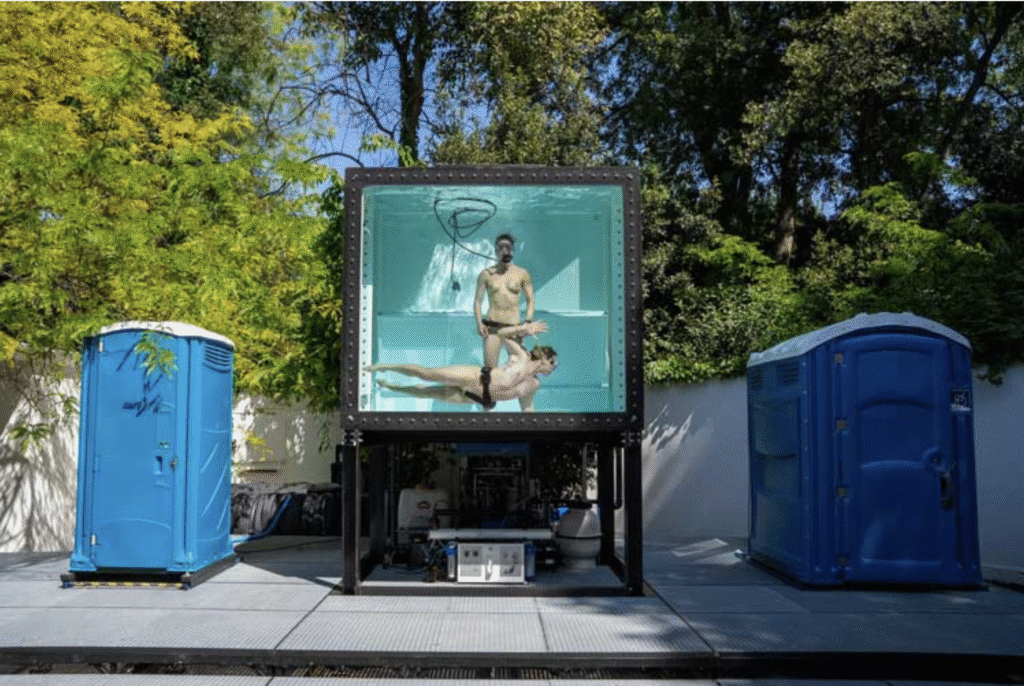
Austrian Pavilion, Venice Biennale 2026, Florentina Holzinger: Seaworld Venice, 2026
Performance defined the Austria pavilion by artist and choreographer Florentina Holzinger, and the presentation also dominated this year’s Biennale. Wildly performative and physically confrontational, the presentation polarized audiences but injected badly needed volatility. Its choreography of bodies, fluids, machinery, and endurance pushed against the contemplative softness dominating the central exhibition. “Seaworld Venice” with all its spectacle around nudity and women’s bodies issued a dire warning of the flood to come: an underwater amusement park and a circling jet-ski signaled ecological catastrophe driven by turbo-tourism, while a group of performers climbed an enormous weathervane as a testament to the strength of collective action, and a performer lived in a reconstructed sewer treatment plant, in a tank sustained by body fluids contributed by the audience.
The pavilion of the United Arab Emirates on the other hand, was among the most elegant meditations on sound and memory this year. Rather than relying on overt spectacle, the exhibition constructed subtle acoustic environments where oral histories dissolved into fragmented whispers and spatial interruptions, with works exploring the intangible. Curated by Bana Kattan and Tala Nassar, the exhibition “Washwasha” features newly commissioned and existing works by Mays Albaik, Jawad Al Malhi, Farah Al Qasimi, Alaa Edris, Lamya Gargash, and Taus Makhacheva that expand on themes of migration, technology, oral histories, and the relationship between language, body, and identity. “Washwasha” is a single onomatopoeic word meaning “whispering” in Arabic. Its meaning resides in the sound itself: quiet, suggestive, and open.
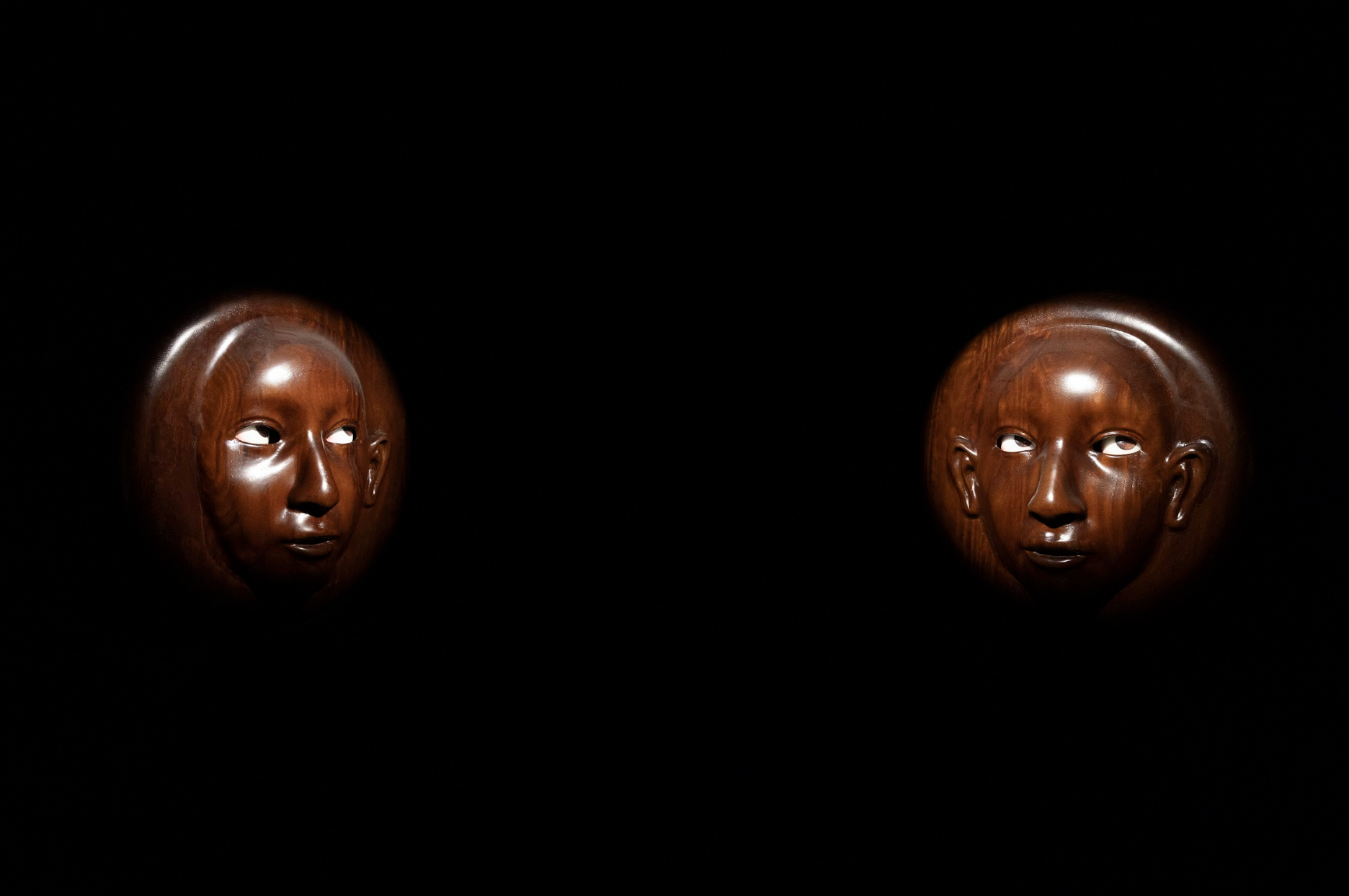
UAE Pavilion_Washwasha Alaa Edris. Wiswas. Image courtesy of National Pavilion UAE – La-Biennale di Venezia. Photo by Ismail Noor of Seeing Things
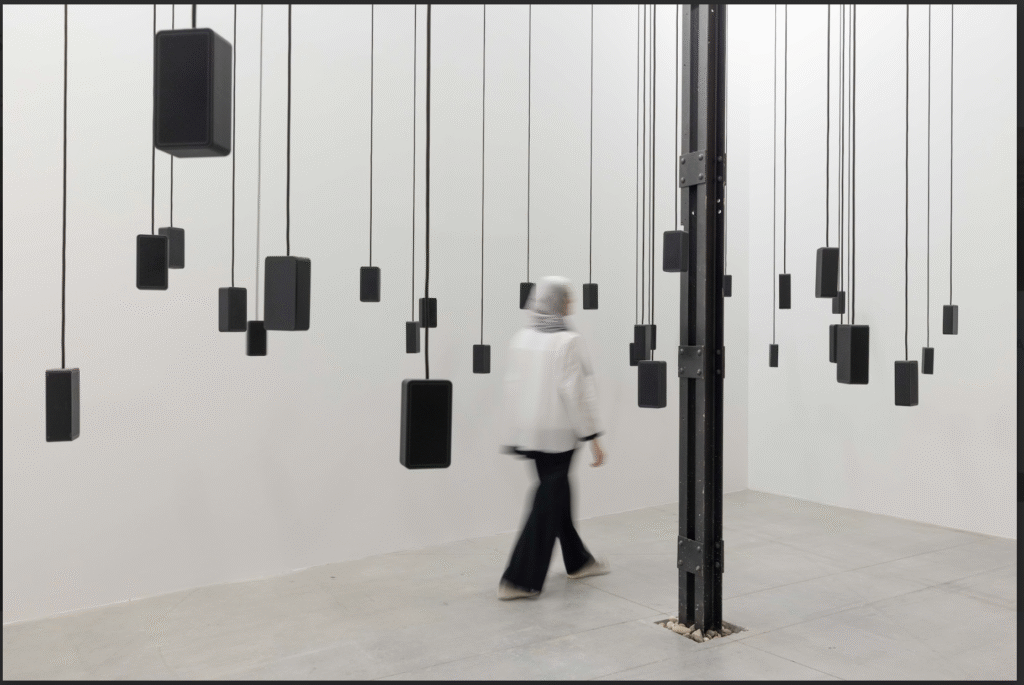
UAE . Image courtesy of National-Pavilion UAE Photo by Ismail Noor of Seeing Things
Meanwhile, Qatar asserted itself with remarkable confidence in its first Venice presence with a presentation focused on communal gathering and memorable shared experiences. The tent-like structure designed by artist Rirkrit Tiravanija serves as a place for cultural exchange, with a film by Qatari-American artist Sophia Al-Maria, live performances organized by Lebanese artist Tarek Atoui, a large-scale sculpture by Kuwaiti- Puerto Rican artist Alia Farid, and a culinary programme of Middle Eastern cuisine designed by Palestinian chef Fadi Kattan.
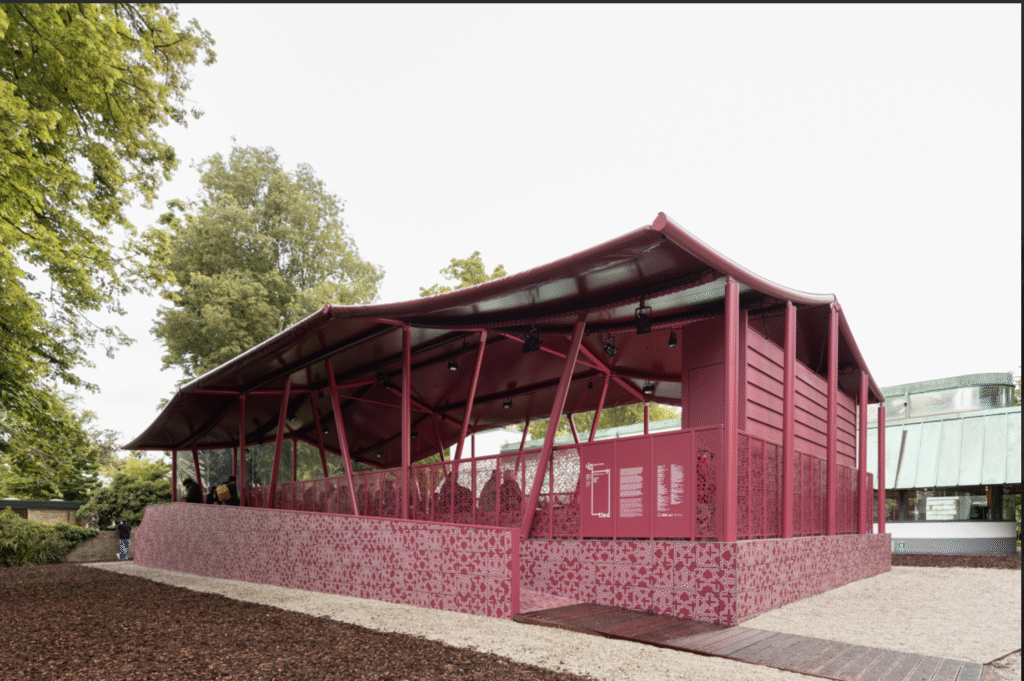
Qatar Pavillian Photo:Marco Cappaletti
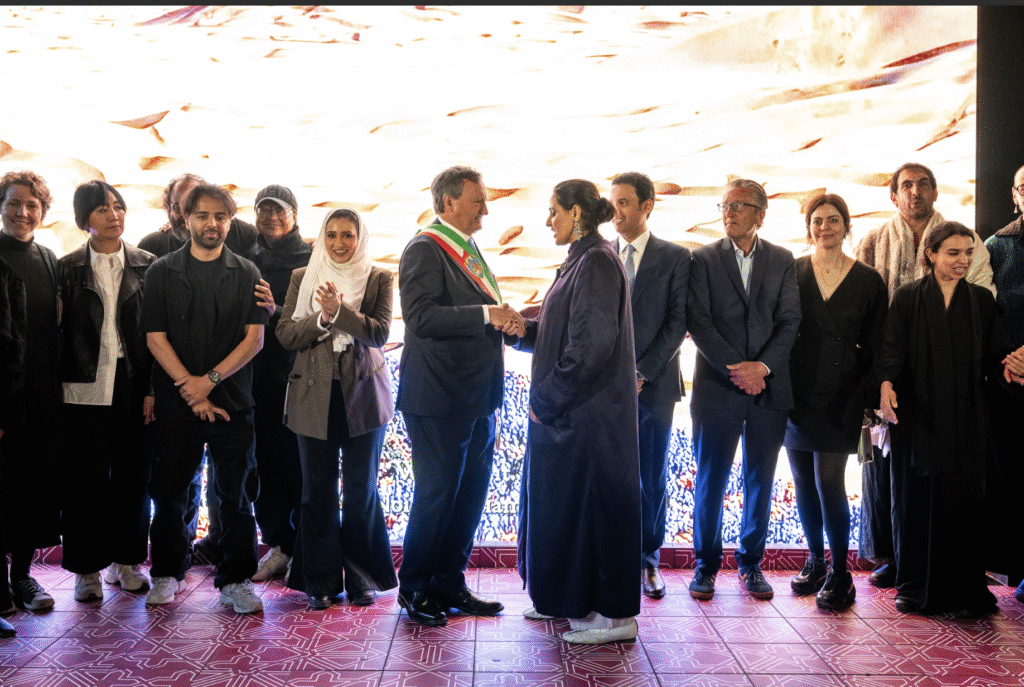
Qatar Pavilion. Her Excellency Sheikha Al Mayassa bint Hamad bin Khalifa Al Thani and Mayor Luigi Brugnaro (c) Ammar Abd Rabbo
France delivered one of the most formally polished yet challenging and multilayered exhibitions of the Biennale with works by Yto Barrada. Its scenography bordered on theatrical luxury, yet several works interrogating language, surveillance, and republican universalism lingered long after viewing.
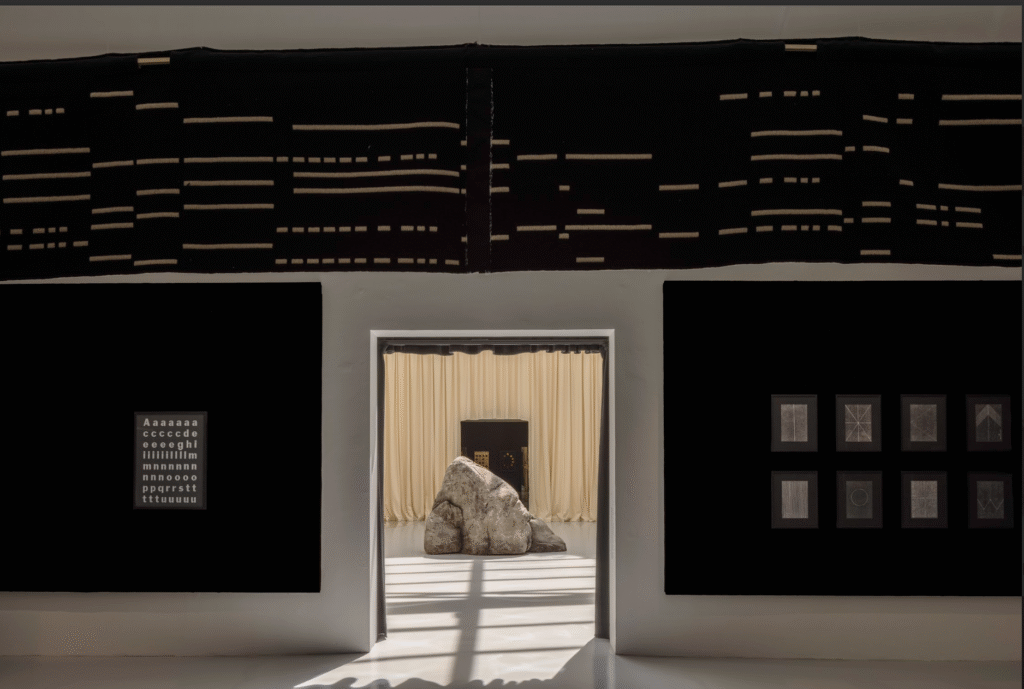
The French Pavillion Photo: Jacobo La Forgio
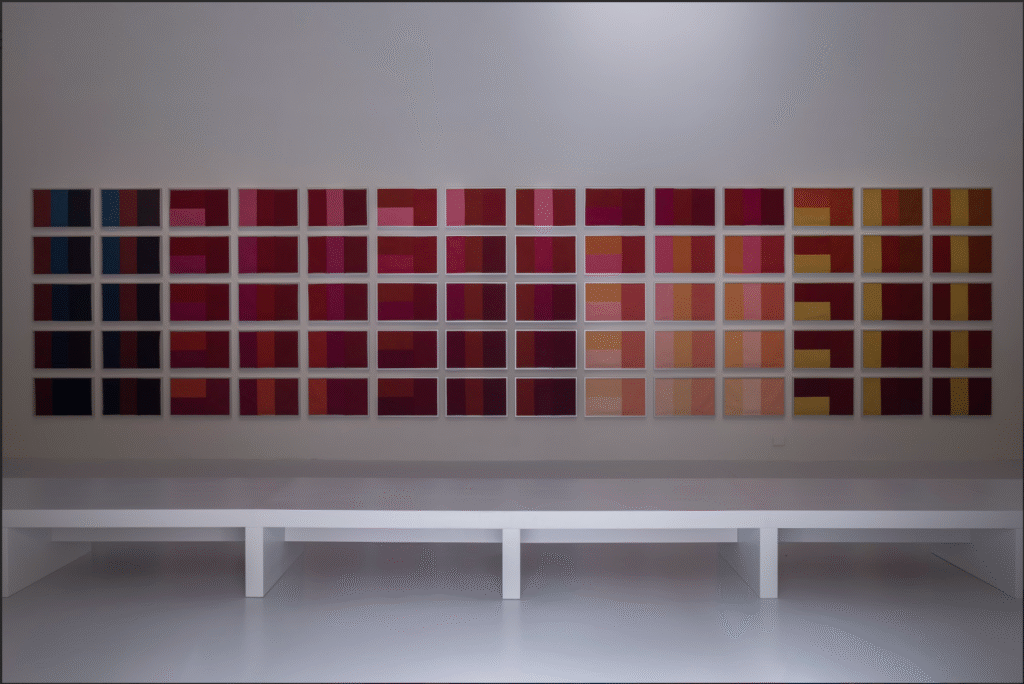
French Pavillion Photo: Jacobo La Forgio
Perhaps the most discussed breakthrough belonged to Morocco. Built around weaving traditions and collective craft practices, the pavilion transformed artisanal labor into spatial architecture without reducing it to folkloric display. The involvement of hundreds of artisans gave the project genuine social density while preserving aesthetic sophistication.
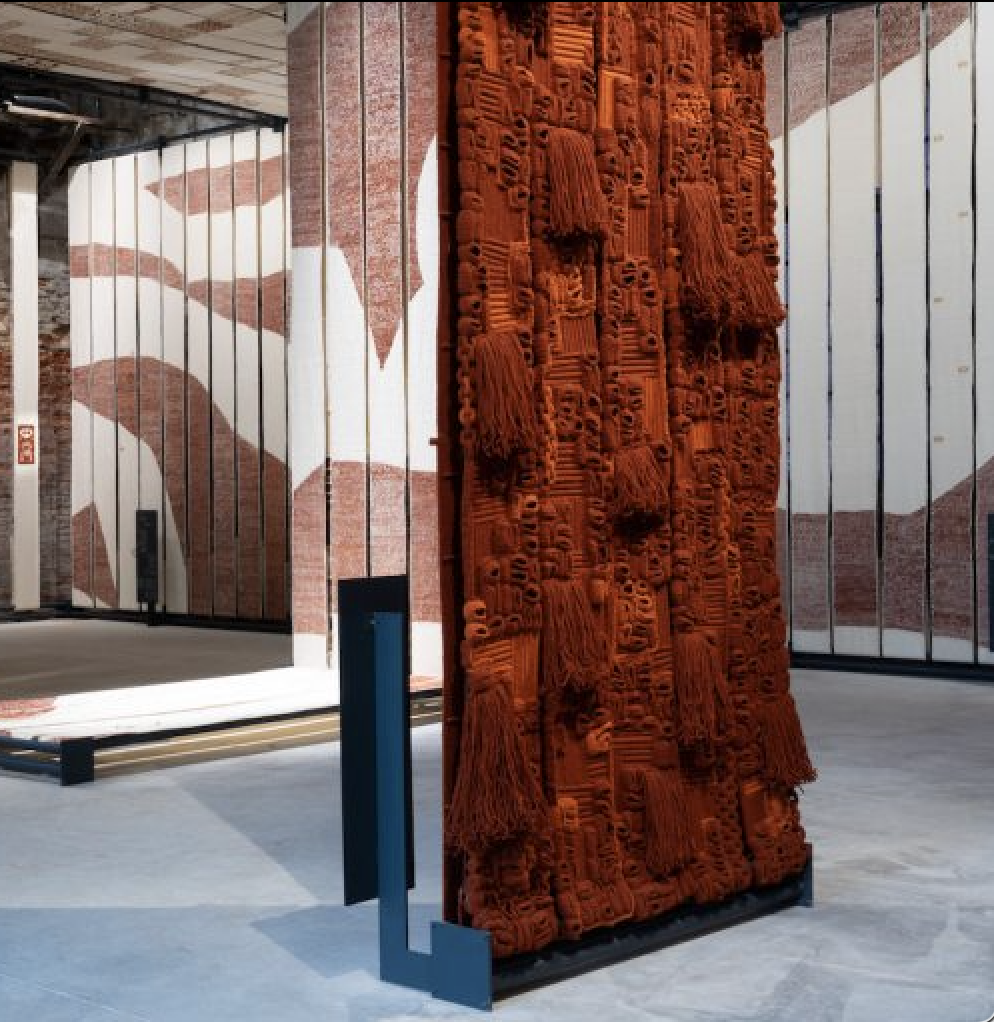
Morocco Pavilion at Venice Art Biennale 2026
The pavilion of Finland offered one of the quiet revelations of Venice. Minimal yet emotionally precise, it explored ecological grief without collapsing into familiar eco-aesthetic clichés.
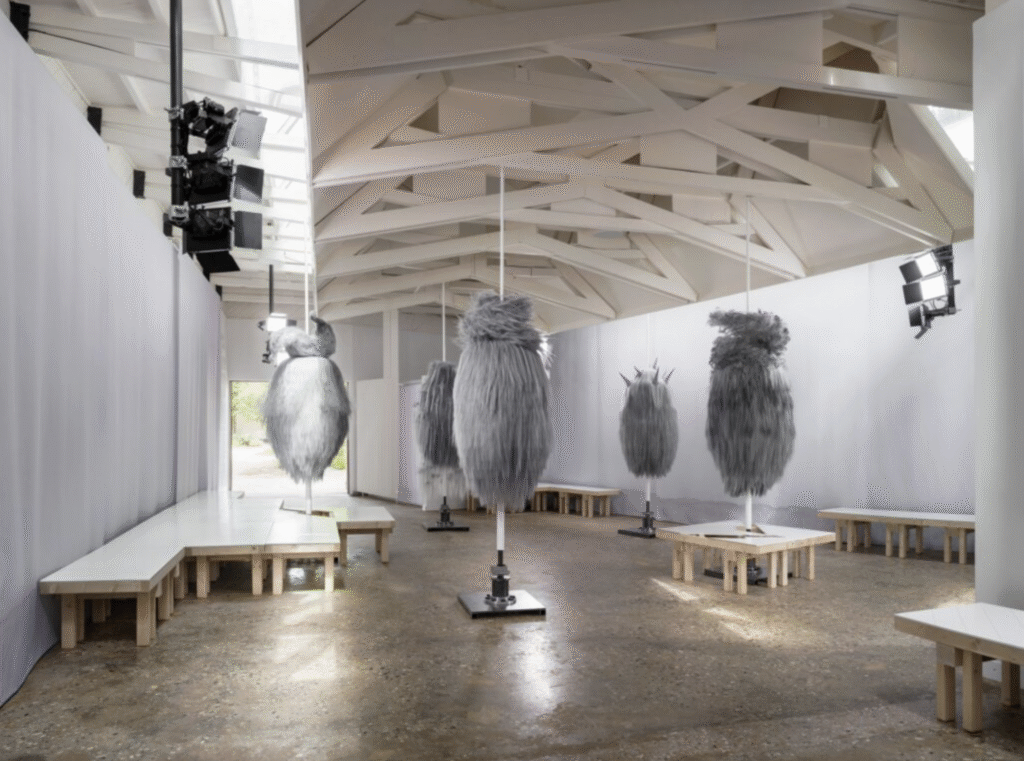
Finnish Pavilion Venice Biennale 2026 Aeolian Suite
For Albania, artist Genti Korini presents “A Place in the Sun,” is a hybrid video work, where live acting, puppetry, 3D animation and an original sonic score converge to form a fictional theatre staged in Zaum — the transrational experimental language of the early twentieth-century avant-garde, which was created as a “pure language” without any grammar or syntax rules, meant to decompose the social order. Genti Korini’s video installation sets the stage for a speculative fiction, where history, fantasy and ideological imagination overlap, meeting in a place where the sun sets or rises over an undefined horizon, stretching out literally across three screens on the Albania Pavilion. “How can we claim roots?” asks Korini, and adds: “They are all contaminated. We all contaminate each other with our culture. There is no such thing as original or native. In my work, I use these quasi mythological rituals that are more ironic than anthropologic. How do we structure a narrative about the unknown? How do we deal with what is frightening us— the other, the immigrant, the different culture, the different religion? I use the fictional non-language as a metaphor for the impossibility of representation. Because when you break language, you can start a new narrative.”
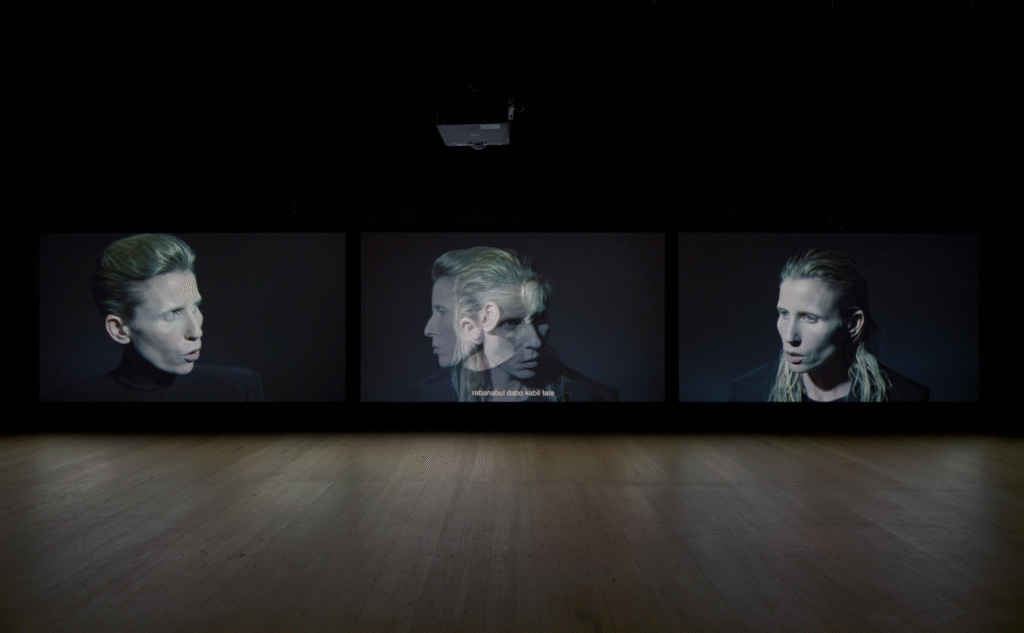
Albania Pavilion – A Place in the Sun – Genti Korini – Photo by Clelia Cadamuro
Situated across the main entrance of the Arsenale, the 2026 pavilion of Azerbaijan presents the exhibition “The Attention” by Faig Ahmed. Conceived as an immersive, multimodal environment, “The Attention” unfolds across a sequence of interconnected spaces with works responding to the uncertainty, anxiety, and information overload of the contemporary era, exploring internal consciousness and reconnection to demonstrate how art can emerge from chaos. Inspired by research on quantum physics and in collaboration with scientists, the exhibition is also conceptually grounded in the legacy of Imadaddin Nasimi—a preeminent Azerbaijani poet and central figure of the Hurufi tradition. The exhibition establishes a direct parallel between Hurufi philosophy and the quantum understanding of reality, positioning quantum information as the contemporary counterpart to these ancient metaphysical insights, which presents an exciting expansion to the sculptural carpet works we often encounter by Ahmed, which still also make an appearance in the pavilion. This extension creates a presentation with immersive components, as we can feel resonance in the earth we touch, and are analysed by the computer system of an installation, offering an unexpected glimpse into who we are.
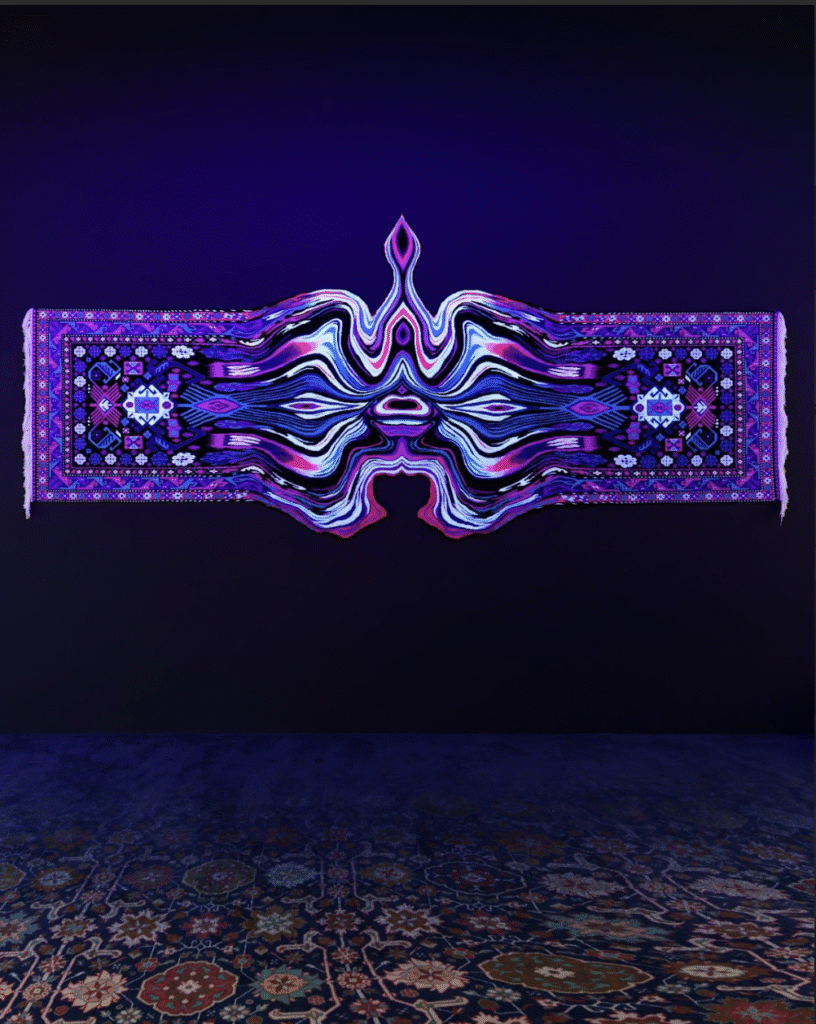
Faig Ahmed. Biennale Arte 2026. Image Courtesy of Faig Ahmed Studio. Photo by Riccardo Banfi
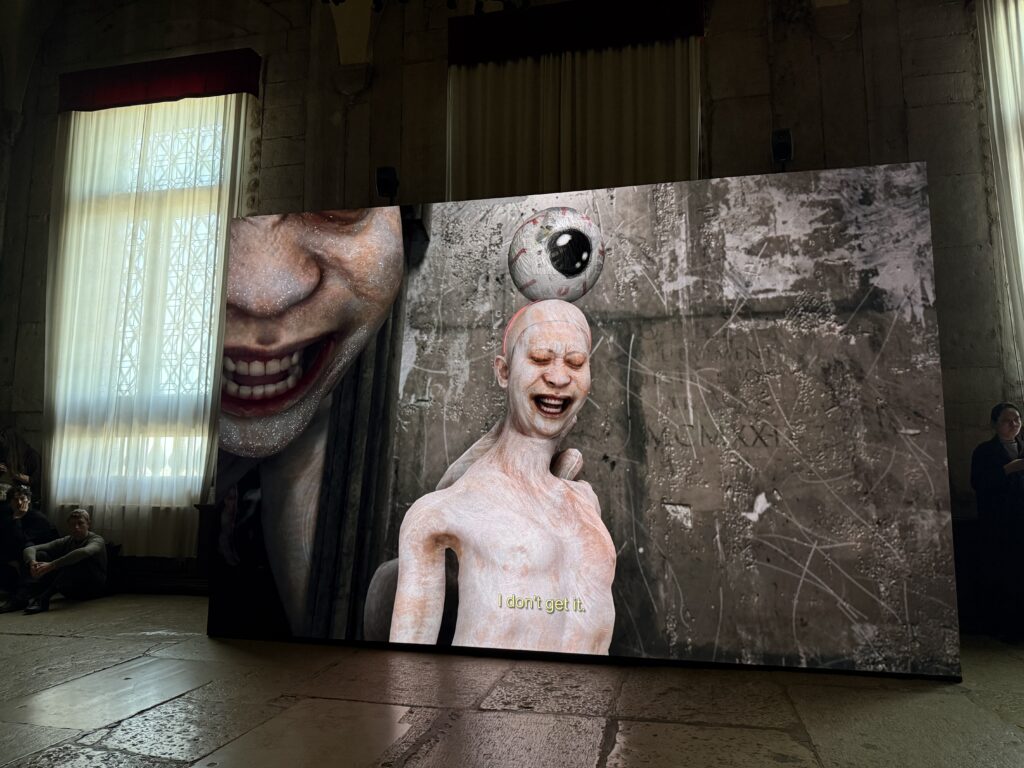
The Taiwan pavilion at the Palazzo delle Prigioni also emerged as one of the quiet triumphs of the Biennale. Curated by Raphael Fonseca and featuring artist Li Yi-Fan, the exhibition “Screen Melancholy” centers on a video installation surrounded by corresponding large scale sculptures. “Screen Melancholy” explores the complex, layered relationship between individuals and images. Through the character in the video, viewers are encouraged to “learn how to make animation,” according to the artist. As a cautionary warning, the work suggests that understanding how images are produced is essential to grasp the power mechanism behind them. Ironically, these profound truths about images are expressed through the very medium of images. While the philosophical-sounding statements are delivered with such sincerity, the character comes across as rather mischievous and uncanny, producing an atmosphere that merges discomfort with amusement, and an unsettling future foreboding.
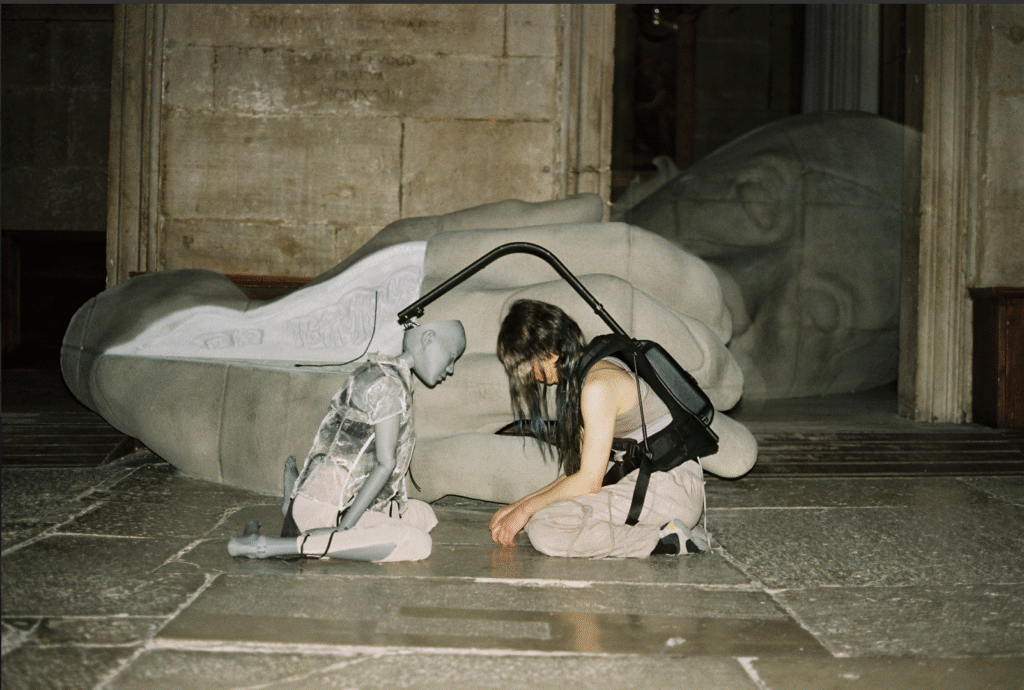
Taiwan Pavilion_opening performance Eunju Hong Photo courtesy of: Eunju Hong
For the preview and opening days, the pavilion also presented a performance work by artist Eunju Hong, that added faceted layers to the experience of the works by Li Yi-Fan. By stepping into a direct dialogue with his work, the performance activated a physical and mental space that extends the explorations present in the video and sculptures. The performance explores boundaries between life and death, subject and object, self and proxy, individual and image. As the performer animates a life-sized 3D-printed puppet modeled after Eunju Hong’s own body, they create an interaction that is intimate, ambivalent, and at times violent rather than conventionally theatrical. Their gestures evoke traces of something lost—an emotion, a presence, a story. Moving through the pavilion with unsettling precision, the body was transformed into an unstable archive — at once mechanical and vulnerable, and carrying the palpable and very present emotional tension even further.
Special mention – Equally compelling was Lotus L. Kang’s intervention at the Bvlgari Pavilion, where photography, oxidation, translucency, and industrial residue were transformed into unstable spatial environments. Kang’s work operated through disappearance rather than declaration: vast suspended surfaces appeared to breathe within the architecture, their chemical transformations unfolding slowly over time. In the context of a Biennale saturated with overtly symbolic material gestures, Kang’s practice felt unusually precise. Materiality here was neither ethnographic nor illustrative; it remained elusive, atmospheric, and fundamentally unresolved. The collaboration with Bvlgari also revealed the increasingly sophisticated relationship between luxury patronage and contemporary art production. Rather than overwhelming the work through branding, the pavilion allowed Kang’s meditations on fragility, exposure, and temporality to retain their ambiguity.
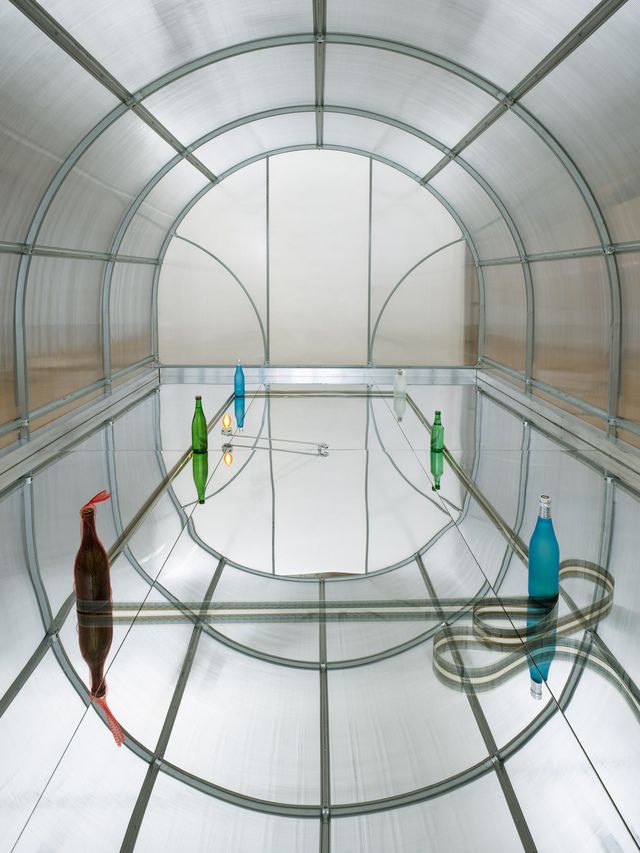
Lotus L. Kang, Receiver Transmitter (49 Echoes II). Photo © Kerry McFate and Chase Barnes
As always, the collateral exhibitions made a major impact. Fondazione Prada presented “Helter Skelter: Arthur Jafa and Richard Prince,” bringing two of the most important US American voices into a direct dialogue for the first time.
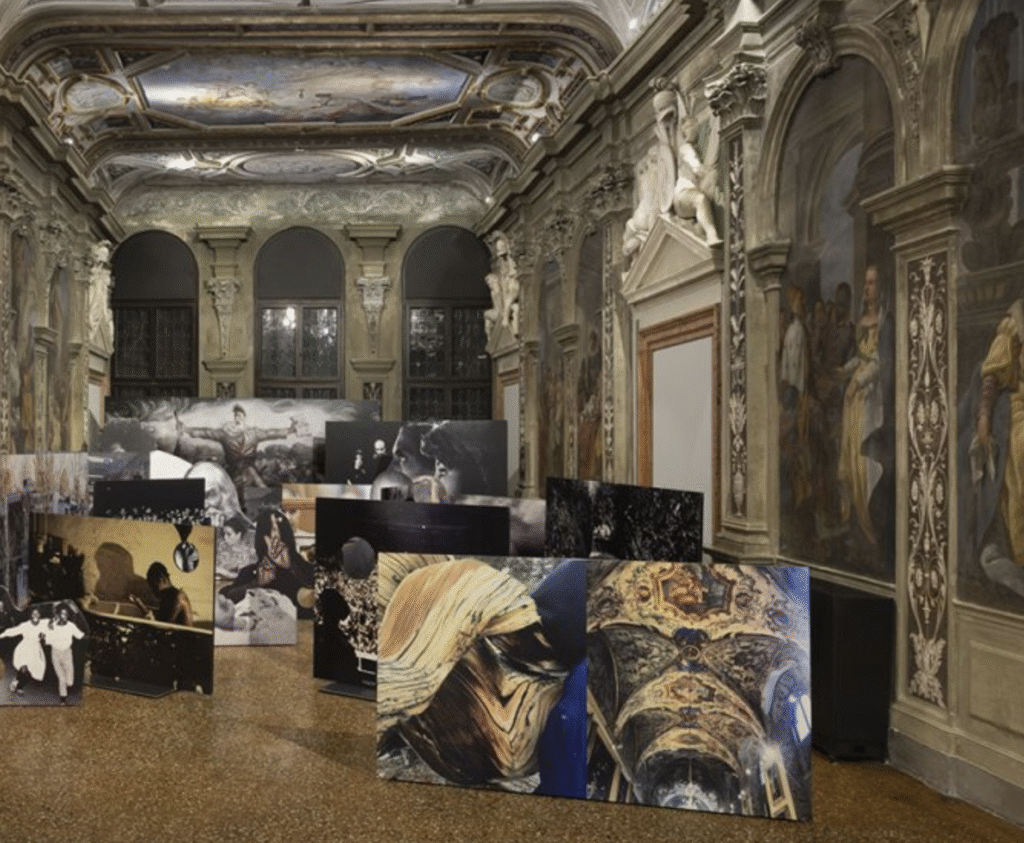
Fondazione Prada “Helter Skelter: Arthur Jafa and Richard Prince
At the Nicoletta Fiorucci Foundation, Lydia Ourahmane presented the solo exhibition “5Works” which comprises new works created in collaboration with local craftspeople and technicians in Venice during the artist’s recent residency.
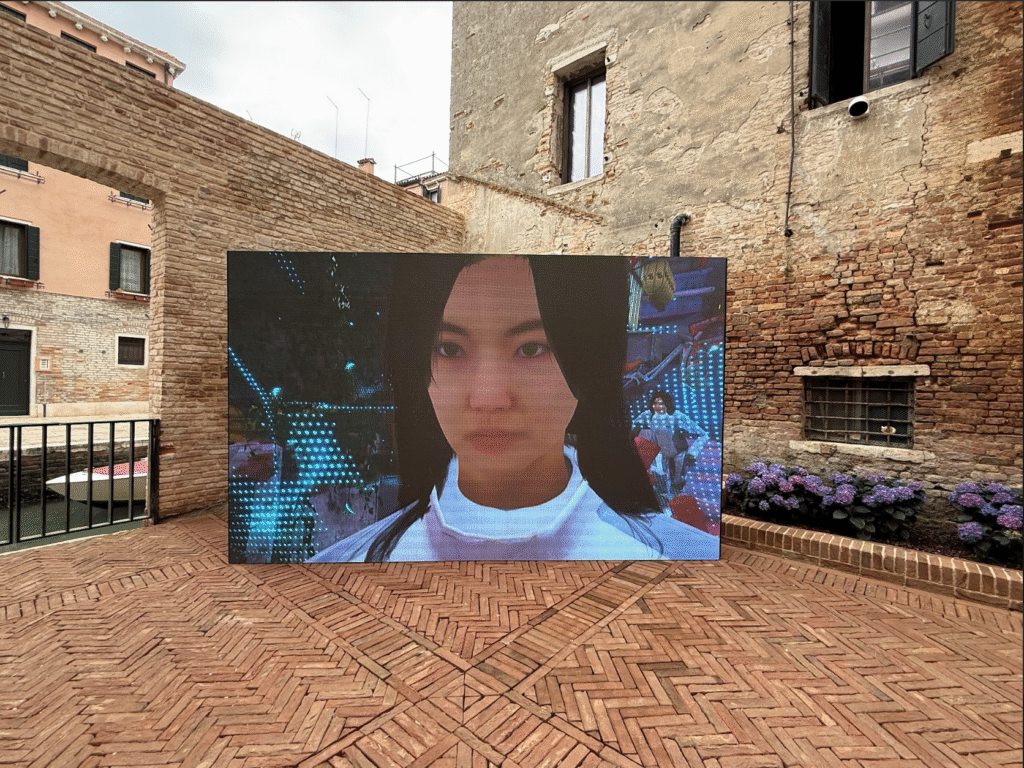
Ayoung Kim Palazzo Diedo photo by Heike Dempster.
At Palazzo Grassi, Michael Armitage’s brilliant paintings in “The Promise of Change” deliver one of the most intellectually layered exhibitions. His paintings, suspended between East African visual histories and European painterly traditions, address many issues of our time, including sociopolitical tensions, violence, alluring ideologies, and the global migration crisis. Lorna Simpson’s masterful meditation on image circulation, Black subjectivity, and cinematic memory at Punta della Dogana is a must-see, and the Hans Ulrich Obsit-curated Strange Rules at Palazzo Diedo should also not be missed, but requires some time due to the many video works by the likes of Ayoung Kim and Ho Tzu Nyen, as well as a the interactive audio installation “Voyager” by Trevor Paglen, which guides participants into hypnotic states of consciousness to create an artistic experience that lives in a liminal space.
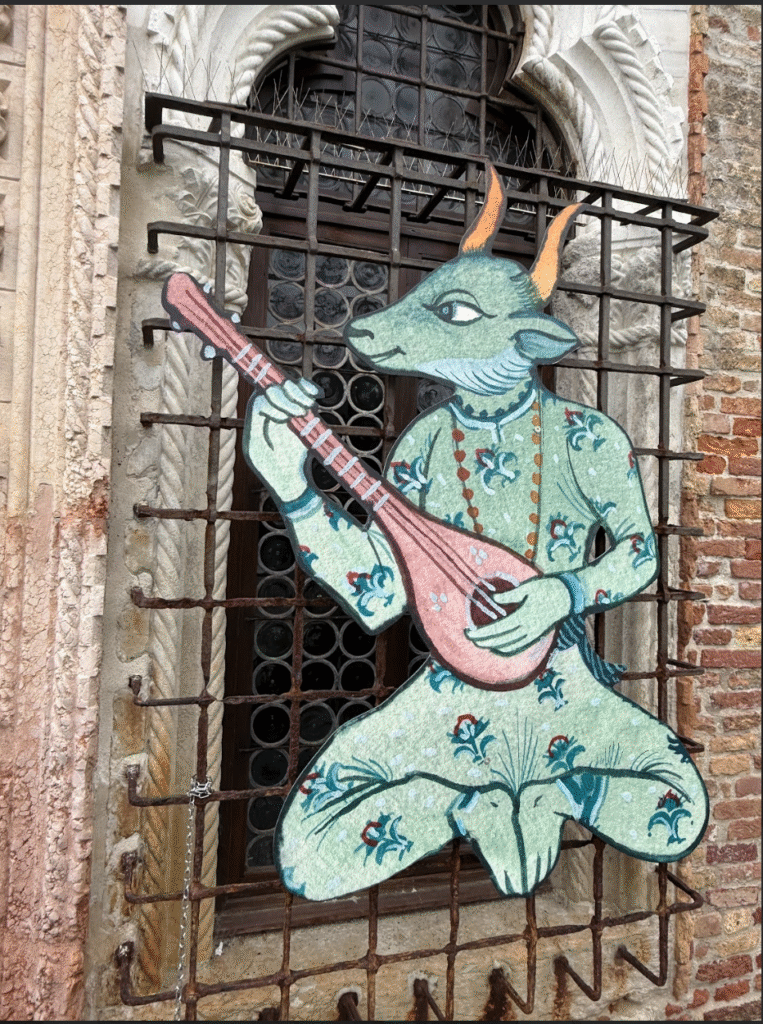
Monira Al Qadiri in A Necessary Fiction Photo by Heike Dempster
Among the memorable thematic exhibitions was The Necessity of Fiction, a sprawling project with works by artists like Monira Al Qadiri and Wael Shawky examining narrative fabrication as political survival strategy. Unlike many research-heavy group exhibitions, it avoided curatorial overexplanation and allowed contradiction to remain productive.
Sanya Kantarovsky delivered one of the sharpest painterly exhibitions in Venice: psychologically unstable figures drifting through melancholic interiors that felt eerily calibrated to the emotional exhaustion of the contemporary art world itself.
An interesting independent presentation was Albedo by Giovanni Ozzola, developed with Beatrice Burati Anderson and presented in collaboration with Galleria Continua, and presented in a Venetian storage space across two sides of the canal, accessible by boat. The exhibition explored light not merely as a visual phenomenon but as a metaphysical threshold. Ozzola’s large-scale works transformed abandoned architectures, horizons, and maritime atmospheres into meditations on perception and disorientation that allowed for silence, duration, and luminosity to carry conceptual weight.
At the opposite end of the emotional spectrum stood Ibrahim Mahama’s Shea Garden, one of the most politically charged installations in Venice outside the official exhibition. Drawing from networks of agricultural labor, trade circulation, and postcolonial extraction, Mahama constructed an environment where organic matter, industrial residue, and collective memory collided. The project’s physical density — layered with scent, texture, and accumulative material histories foregrounded systems of labor and economic violence without sacrificing formal complexity.
Meanwhile, at Espace Louis Vuitton Venezia, Lu Yang delivered a visually overwhelming and mesmerizing exhibition that blurred gaming culture, Buddhist cosmology, AI-generated identity, and hyper-digital aesthetics. Neon avatars, synthetic bodies, and algorithmic reincarnations flooded the space with manic intensity. Crucially, the exhibition challenged the implicit binary that continues to structure many global exhibitions: the assumption that spirituality must appear through craft, ritual, or material earthiness rather than through technological excess and virtual embodiment.
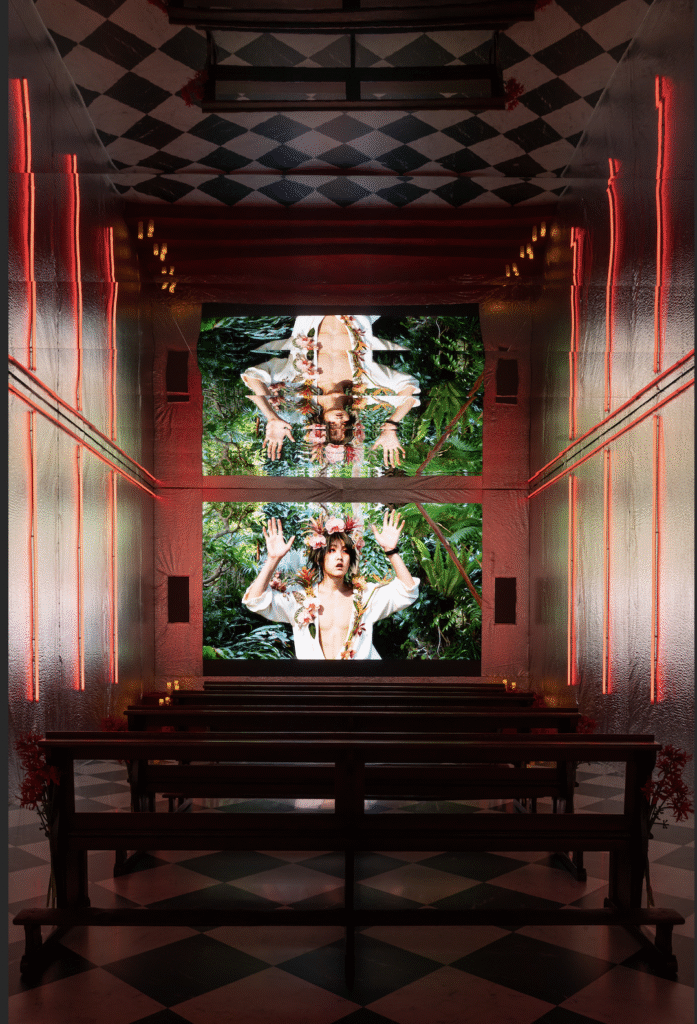
LU YANG DOKU THE ILLUSION Espace Louis Vuitton Venezia 2026 Photo credits ©Ludovica Arcero
What would Venice preview and opening days be without the community, the aperitivo get togethers, the parties, the breakfast gatherings (shout out to 193 Gallery hosting a daily Moroccan breakfast in their new Venice space in connection to their Hassan Hajjaj exhibition) and the fabulous dinners. One of the most incredible dinner parties is certainly the Golden Goose evening at the Haus of Dreamers. The Venetian luxury fashion company always celebrates the Venice Biennale in style with guests merging the worlds of fashion, art, film and music. This year’s candlelit dinner unfolded in the Hangar, curated by MICHELIN-starred restaurant Da Gorini. Known for using locally sourced ingredients, Da Gorini, alongside flower designer Federica Carlini, created an interactive mise en place inspired by the forest. For this year’s art activation, HAUS handed over its keys to the multidisciplinary Los Angeles-based studio PLAYLAB, INC. With “The Forest For The Trees”, they presented an interactive artistic installation. Framed as a storybook-like exploration of possibility, the exhibition invites visitors into a childlike world where imagination is limitless. PLAYLAB, INC. infused every corner of HAUS with a sequence of interconnected experiences and immersive environments that blur the line between viewer and creator.
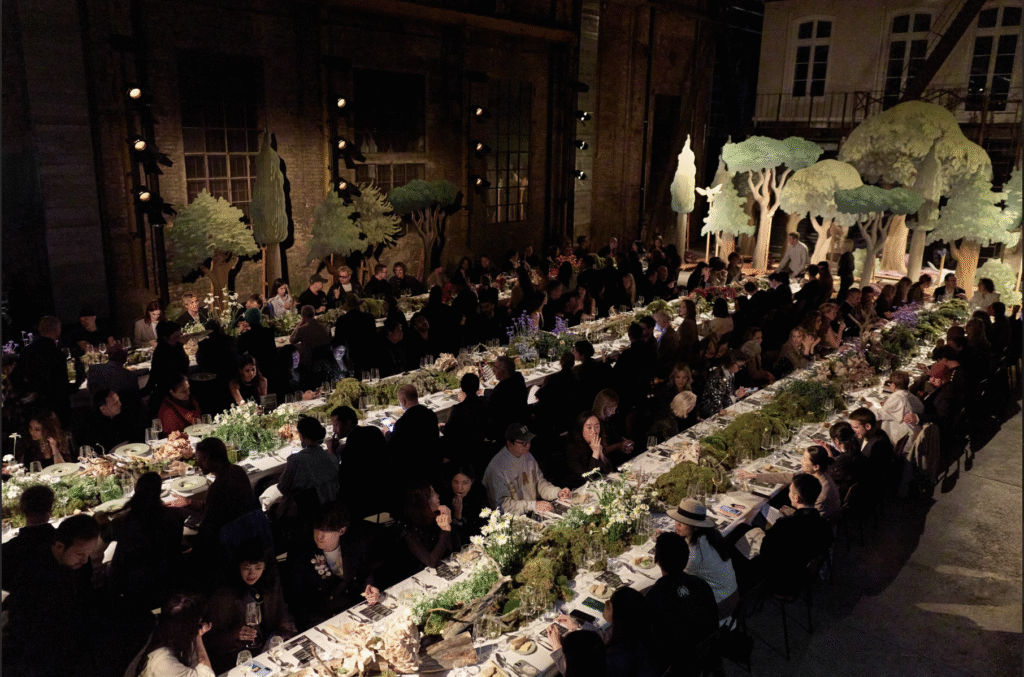
Golden Goose Dinner


Michael Hafftka in Studio I opened the car door and stepped out with my red umbrella in hand onto the. Continue reading
Color wasn’t play, it was reclaiming joy, subverting despair, insisting on life.
Through her fusion of photography, AI, and living forms, Dahlia Dreszer cultivates a new aesthetic ecology,. Continue reading
Chloe Chiasson brings you to a place where the earth smells like dry grass, cracked, worn leather, and warm. Continue reading