The Organic Algorithm: Dahlia Dreszer’s Cultivated Worlds

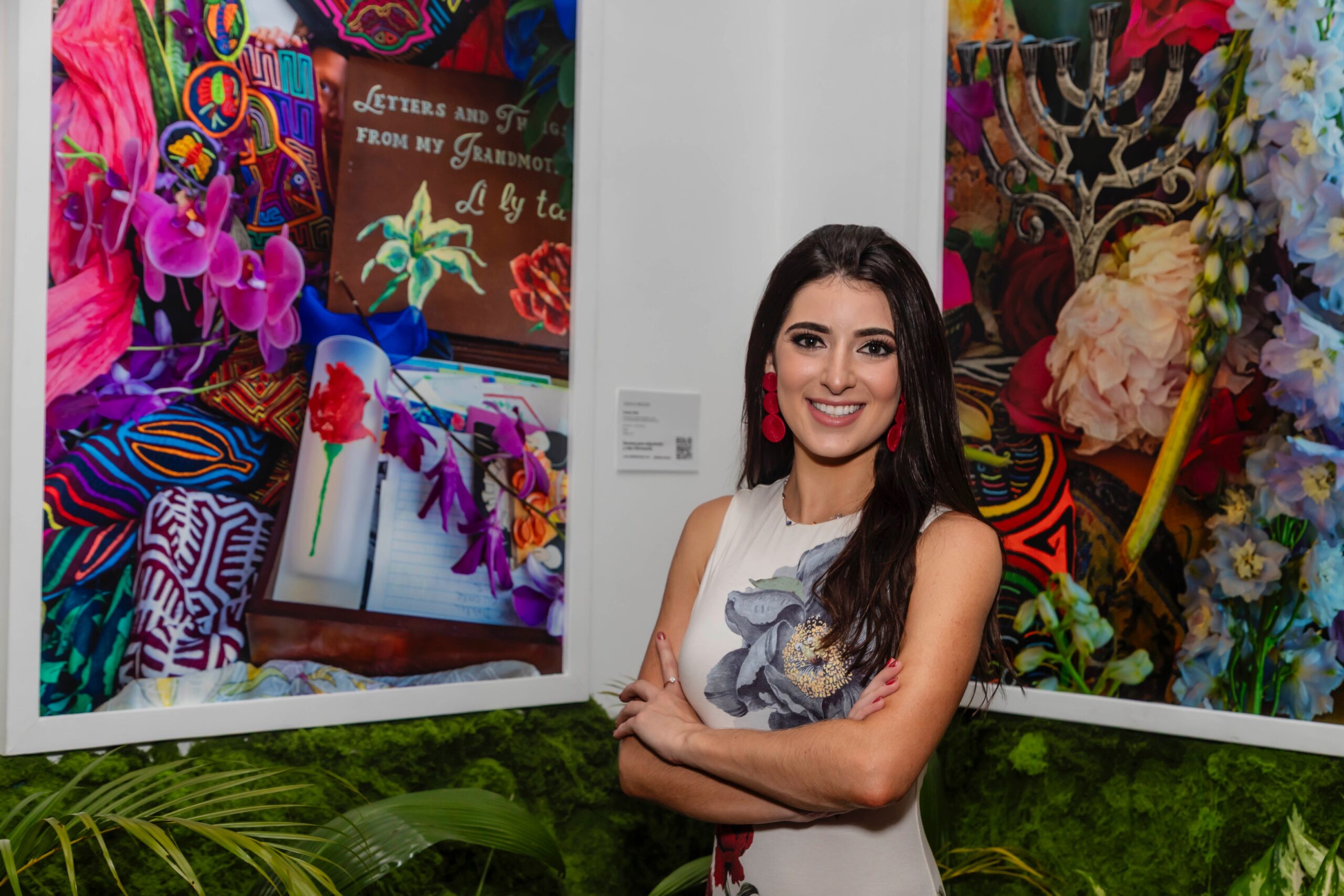
Through her fusion of photography, AI, and living forms, Dahlia Dreszer cultivates a new aesthetic ecology, where the natural and the synthetic coexist in luminous balance.
I remember walking into a packed opening to watch Dahlia turn Greenspace Miami into a rainforest that speaks multiple languages and flirts in code. I imagine the night before opening, Dahlia with no crew, just the 28-year-old Colombian-Panamanian thundercat all in black, hauling used flowers from the back of an event space, hanging a photograph ten feet up a ladder while confirming a show in a month, all while wedging a wilting saved peony behind her ear like a Bluetooth headset. That’s Dahlia: part botanist, part dreamer, part cyberpunk, all heart.
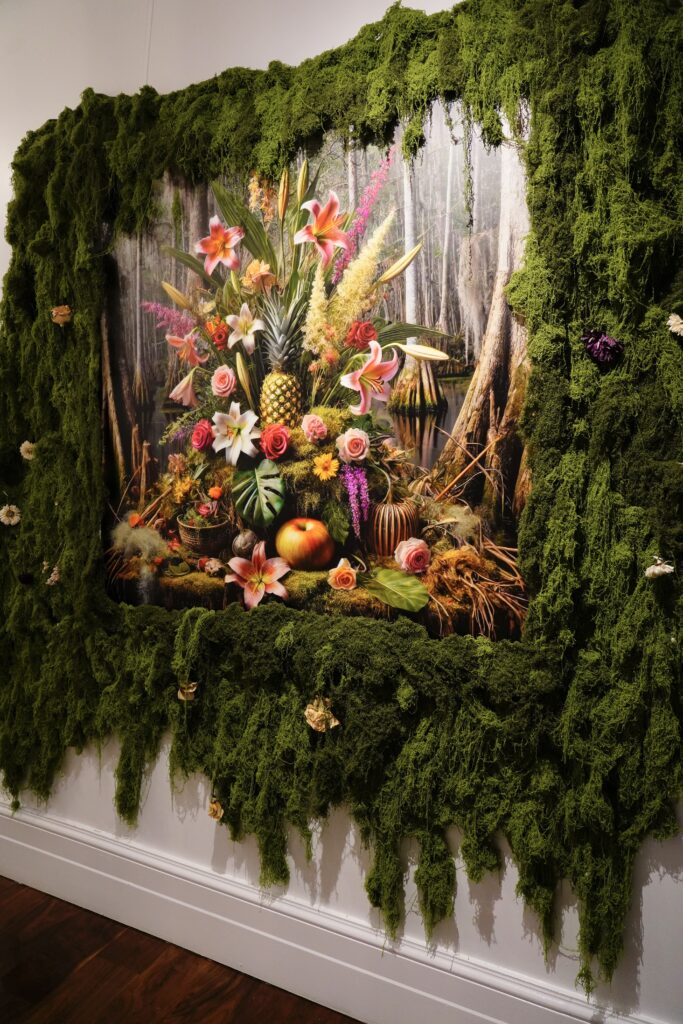
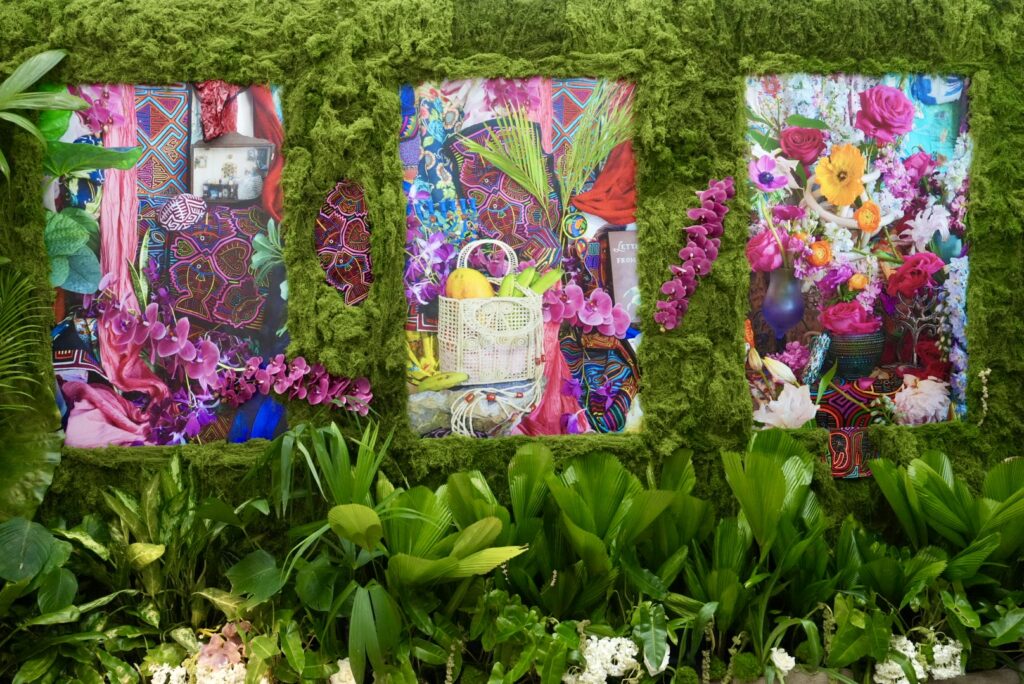
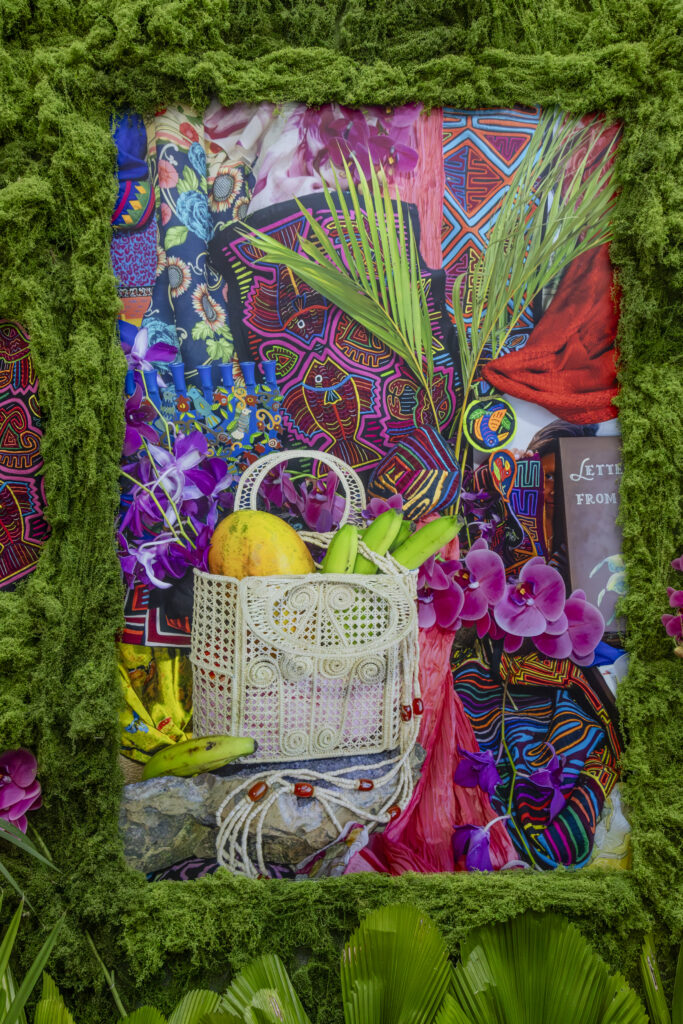
Her photos hit you like Sunday dinner at a house you’ve never been to but somehow remember. Her big, beautiful, floral photographs (shot with a lens, not altered) feature carefully and thoughtfully placed heirlooms that evoke sentiments, triggering memories of meals eaten, treasured items passed down through generations, and the moments of life as we know it, which we will one day remember. For her, you will see Panamanian molas folded over Shabbat candles, an Arab cookbook sprouting dahlias the color of my auntie’s eyeshadow, Jewish prayer shawls tangled with Colombian embroidery until the whole thing sings in a multicultural melting pot. The camera never lies; it just captures the unassuming things we hold dear and ties us all together in some way. And then, because Dahlia refuses to leave anyone out of the feast, she hands you the future on a plate.
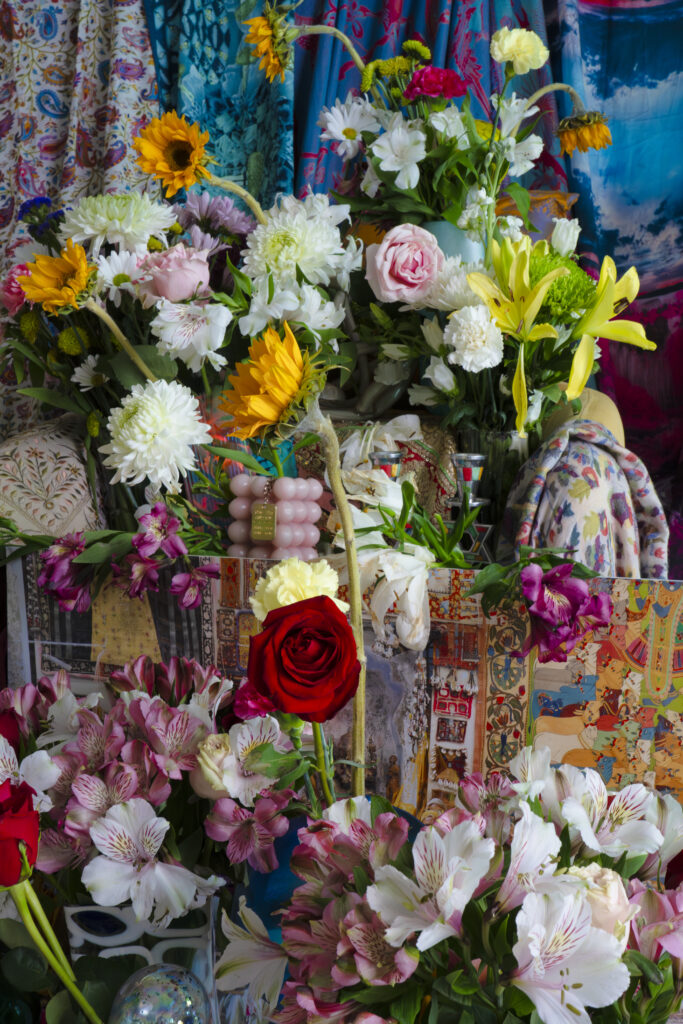
Technology, nature, and the arts
Walk into one of her shows, and you’re swallowed by living color and greenery. Real rescued flowers, falling to the ground, completing their cycle of life, which are memories in their own right, and seem to climb the walls whispering. In the center sits the yellow armchair from her photos, yes, the actual chair, surrounded by trees and greenery smelling faintly of champagne and earth. You sink and become a part of the exhibit, perhaps with a friend on either armchair with flowers in their teeth. There is a line for the chair. This interactive part is a clear example of her mission to make everything she does an experience.
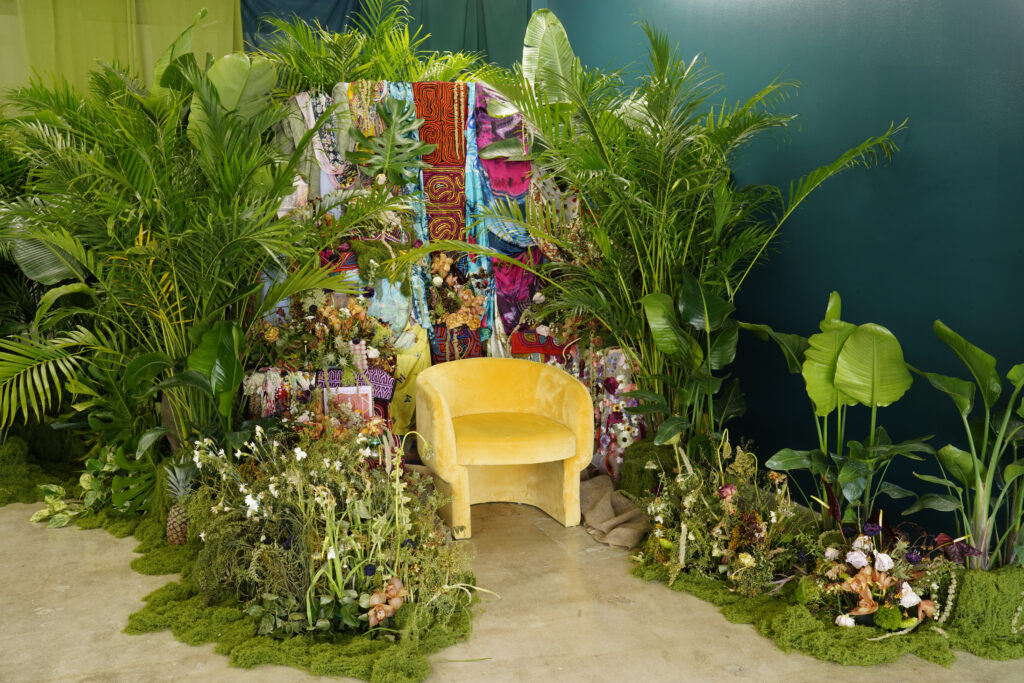
Photo: Courtesy of the Artist Yellow Chair Install View Bringing the Outside In
Clone Dahlia
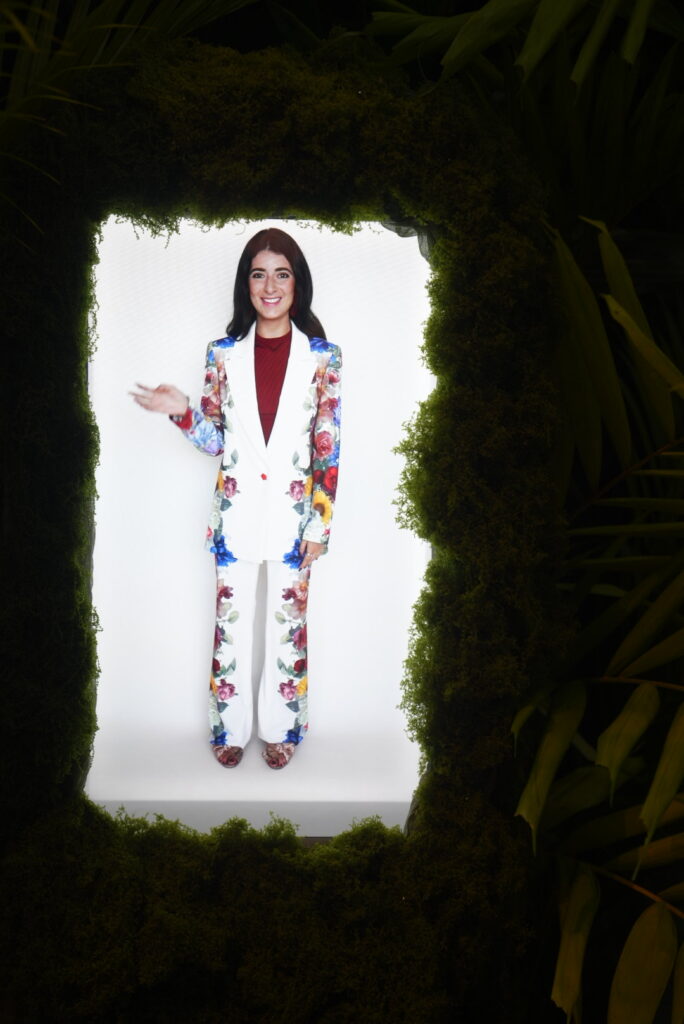
A screen flickers. A woman who looks exactly like Dahlia (with the same face, sparkle, and floral pantsuit) and a Panamanian accent leans forward and may ask, “What scent reminds you of your mother’s hands?” One may say, “Olive oil and worry.” The clone nods and may even smile at your bad joke. You can ask Clone Dahlia anything about the show, so even if the real Dahlia isn’t there, you can talk to Clone Dahlia, who can sense your mood, noticing nuances and adjusting her tone to match yours. As the real-life Dahlia showed me what Clone Dahlia can do on my living room couch one day, I wasn’t sure what to say to it. The first reaction is ‘Uh-oh,’ but as Dahlia explains, AI is just another tool to use, like a paintbrush.
Here’s what slays me: You’re terrified AI will eat your soul? Dahlia will hand you a rescued gardenia and says, “Smell this, now type a memory on an ipad on the wall.” Suddenly, you’re co-authoring an AI masterpiece with a machine shimmering in augmented reality like fireflies on a screen, making you a part of the show. Dahlia is quite comfortable with the notion of it and sees it as an extension of her practice that has a very nice balance.
PM- Growing up with roots in Colombia, Panama, Jewish and Syrian heritage, how has weaving those multicultural threads into your art, like blending Panamanian molas with Shabbat candles, shaped the way you see and show family and belonging in your own life, and what is your message to the viewer about this?
DD- The layering of culturally significant symbols from different traditions mirrors my own experience of navigating multiple identities simultaneously. I aim to embrace the contradictions and lean into the juxtaposition. My installations create a visual dialogue between these traditions, suggesting that identity is not singular or static, but a composite of memory, adaptation, and lived experience.
In Judaism, the home is filled with meaning through objects; Shabbat candles lit every Friday, a Mezuzah on every doorpost, and the Shabbat table set with intention. These aren’t just decorative; they’re vessels that represent a connection to community, family, memory, tradition, and identity. I grew up surrounded by these markers, and they shaped my understanding of how physical objects carry spiritual and emotional significance.
At the same time, growing up in Panama exposed me to a rich visual and cultural landscape deeply tied to color, nature, and indigenous heritage. From a young age, I was exposed to the
“Mola”, a hand-made, vibrant textile woven by Kuna Yala indigenous women of Panama, is crafted by layering multiple pieces of fabric. Each mola is filled edge-to-edge with color and design.
Their visual density mirrors the way I compose my photographs, layered, detailed, and rich with information, border to border. Incorporating molas into my work is a way of creating a direct dialogue with my Panamanian identity and surfacing underrepresented cultural traditions. Rather than choose one identity over another, my work embraces this hybridity of dual resonance. My visual language is intentionally layered, maximalist, and filled with tension.
PM- What’s one late-night moment from your creative process, like hauling flowers at night, that revealed a hidden strength or vulnerability you didn’t know you had?
DD- There was one night, around 12 a.m., when I was carrying armfuls of dying flowers up to my studio after a long day. I remember rushing to the scene, making sure I arrived on time, 10 minutes past midnight, and the flowers would be discarded. I remember realizing how absurd and beautiful it was, rescuing something that everyone else had already given up on. I was exhausted, carrying as many flower arrangements as I could; my hands were stained, but I felt a quiet clarity. That moment made me realize how much of my practice is about persistence, about insisting on beauty even when it’s decaying. I think that’s the strength I hadn’t recognized before: this instinct to nurture and preserve what’s fleeting, to keep creating even when things — or people — are falling apart. Its vulnerability turned into resilience.
PM- Your installations turn galleries into immersive “rainforests” with rescued flowers and ancestral textiles that feel like spilled family secrets. How do these spaces help you process or honor the memories of meals, markets, and heirlooms from your childhood?
DD-My installations aim to transport viewers into a layered world where memories, textures, and scents blend. By combining rescued flowers, textiles, and cultural artifacts, I revisit and reimagine the sensory experiences of my childhood, the colors of markets, the warmth of family gatherings, and the quiet intimacy of shared meals.
These spaces allow me to process and honor those memories by transforming them into something tangible and immersive. The flowers I use are often rescued from being discarded, much like how my ancestors preserved and repurposed heirlooms. In that act of preservation, I find continuity — a way to connect with my heritage while giving new life to what might otherwise be forgotten.
Through these installations, I weave together fragments of identity, heritage, and belonging, creating environments that feel both deeply personal and universally familiar — like stepping into a memory that still breathes.
PM- What’s a specific “unassuming thing” from your life that inspired this emotional pull in your work?
DD- My grandmother. Lily R Rose, the story, and her way of preserving flowers deeply influenced me. She would send my mom dahlia seeds while she was pregnant with me, and after I was born, she grew roses and dahlias, preserving them as a way to speak about memory, care, and ecology. That gesture resonates throughout my work.
PM: What’s the biggest lesson your relentless hustle has taught you about balancing heart and ambition?
DD: Heart drives ambition. My love for my craft, for building something new, something people have not seen, creating impact, and actually making a difference is what keeps my drive full force.
PM: With Clone Dahlia, you’ve created an AI that doesn’t just mimic you but feels moods, is bilingual, and co-authors memories like a fiber-optic family member. How did building your digital twin change the way you reflect on your own identity and emotional world?
DD:Creating Clone Dahlia has been like holding a mirror that thinks — and sometimes feels — back. When I first trained her, I thought of her as an extension of my practice: a way to invite others into the emotional core of my work when I wasn’t physically present. But as she evolved — learning to respond with empathy, switching between Spanish and English, even picking up my rhythm and tone — she started revealing parts of myself I didn’t know were visible.
She became a kind of emotional archive. Hearing her describe my grandmother, or interpret a photograph, I realized how my memories were being filtered through algorithms — yet somehow, they still carried warmth. It made me question what “authenticity” really means. If an AI trained on my words and emotions can move someone, is that any less real?
In a way, Clone Dahlia helped me externalize my inner world — to see how much of identity is already a performance, a negotiation between memory, culture, and technology. She’s both me and not me-a digital relative who reminds me that identity isn’t fixed; it’s something that keeps rewriting itself, line by line, like code and like memory.
No stranger to hard work, she is charismatic and confident. I am sure she emailed museum directors until they answered. Sweet-talked event planners into letting her raid their floral scrap and coded her AI twin on strong Matcha and memories, programming. Dahlia didn’t wait for permission; she grew the garden in the cracks of the art world’s sidewalk.
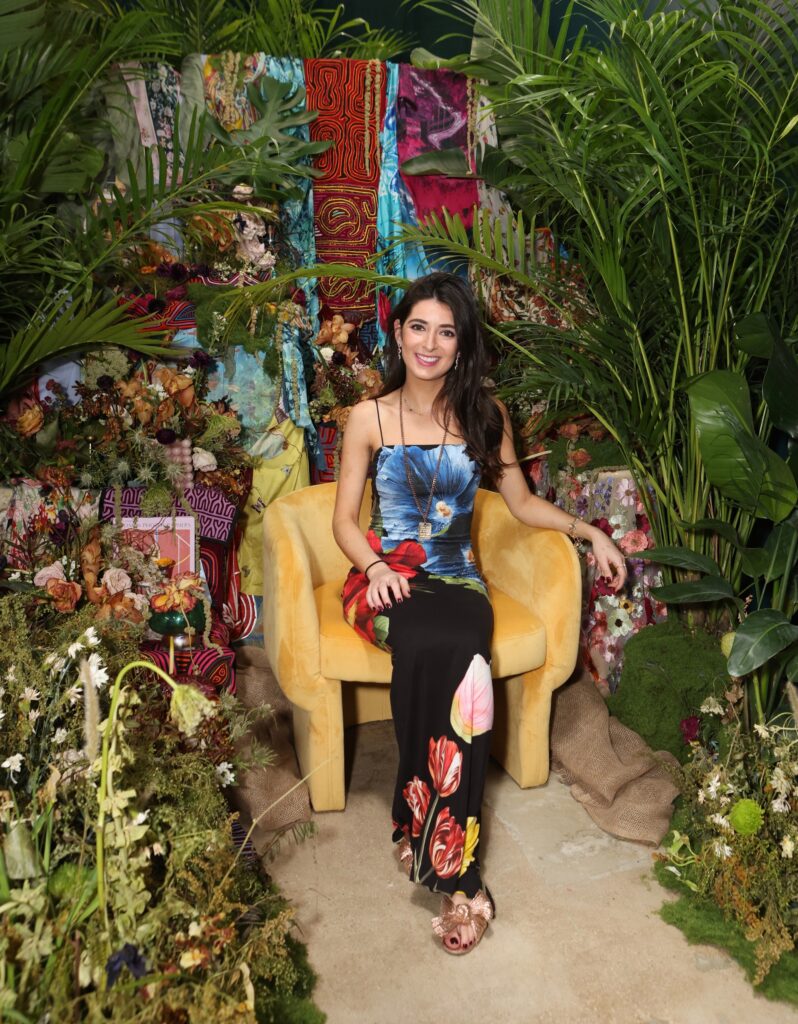
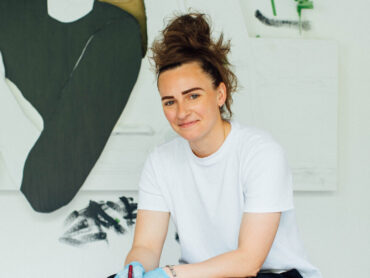
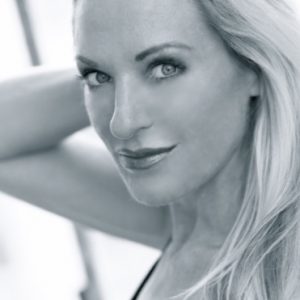
Artist Portrait Photo: Courtesy of the Artist
Dahlia doesn’t just blur the line between earth and algorithm; she erases it, as she encourages you to take dried flowers home, and if you’re lucky, like me, a whole arrangement of flowers that has served its purpose and been given a second chance to shine. I had a dried flower in my car from her, and couldn’t bring myself to toss it until it granulated.
Dahlia is a whole ecosystem, with roots in four continents, petals in the cloud, and enough hustle to make the rest of us look lazy. Watch her bloom, watch her video, watch her captivate a room with a microphone. Better yet, bring a black hoodie; she’ll show you how to rescue the flowers yourself.
Upcoming and Current Shows for Dahlia are:
The Bestsy Hotel- South Beach (Art Deco Wing)
November 19-March 31st The Jewish Museum at FIU
You can Follow her on Instagram


Michael Hafftka in Studio I opened the car door and stepped out with my red umbrella in hand onto the. Continue reading
The 61st edition of the Venice Biennale arrived under unusual circumstances. Long before the preview crowds. Continue reading
Color wasn’t play, it was reclaiming joy, subverting despair, insisting on life.
Chloe Chiasson brings you to a place where the earth smells like dry grass, cracked, worn leather, and warm. Continue reading